

Drug Interaction Checking in Pharmacy Practice
Master drug interaction checking in pharmacy. Learn systematic approaches to identifying, assessing, and managing medication interactions for patient safety.
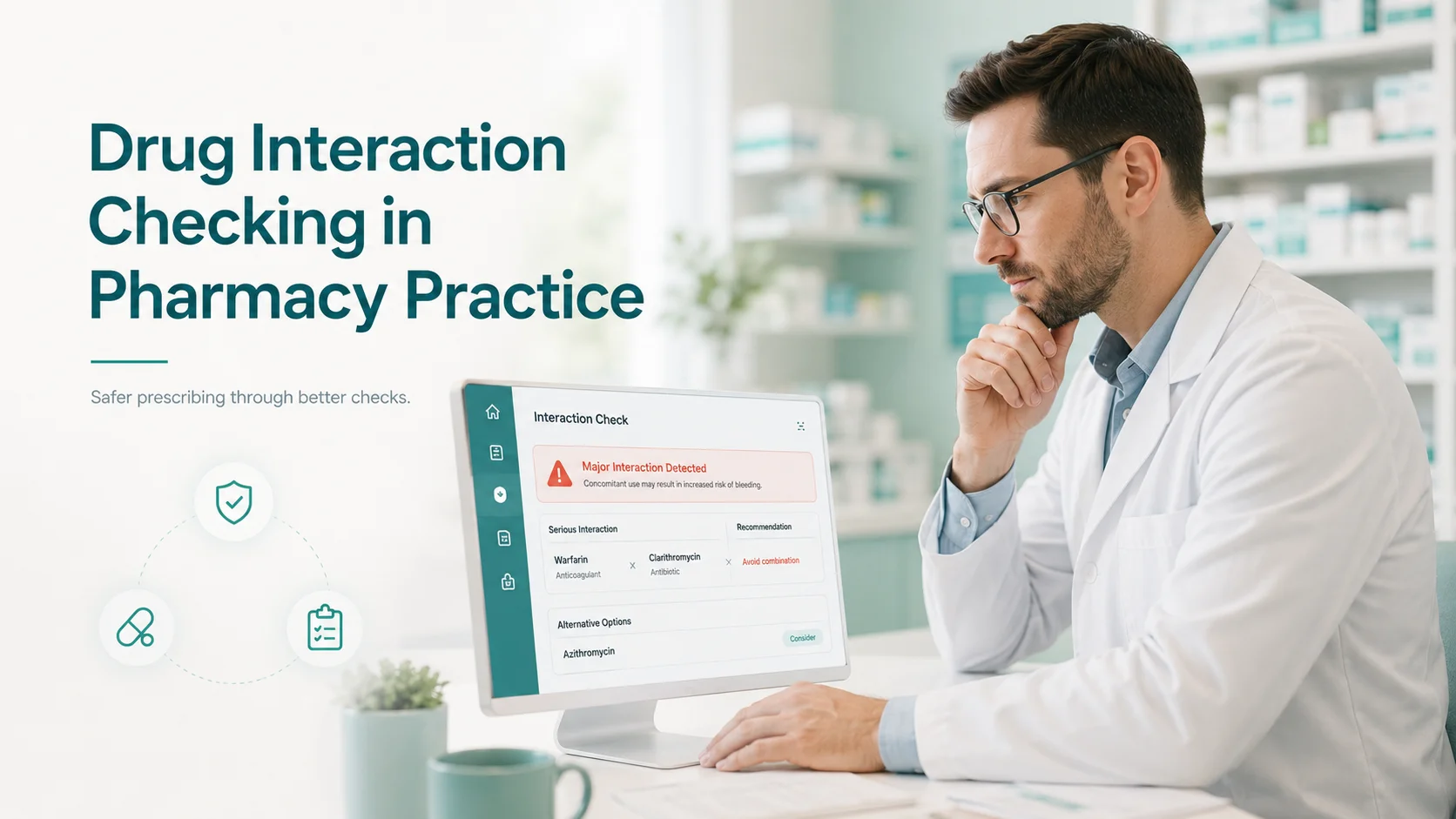
Methotrexate. NSAIDs. Potentially fatal interaction. Reduced methotrexate excretion. Bone marrow suppression. Death has occurred.
This interaction is well-documented. It appears in every interaction checker. Yet patients still die from it because the interaction was not identified at the point of care.
Understanding Drug Interactions
Interaction Mechanisms
Pharmacokinetic: One drug affects another drug absorption (antacids reducing antibiotic absorption), distribution (protein binding displacement), metabolism (CYP450 induction or inhibition), or excretion (renal competition).
Pharmacodynamic: Drugs with similar or opposing effects: additive effects (sedation from multiple CNS depressants), antagonistic effects (beta-blocker opposing salbutamol), enhanced effects (anticoagulant effect increased by NSAIDs).
Clinical Significance
Not all interactions matter equally. Severity from life-threatening to minor. Probability from definite to theoretical. Evidence quality varies. Patient factors affect risk. Clinical relevance depends on context.
Systematic Interaction Checking
When to Check
Every prescription: new medications against existing therapy. Every consultation: OTC requests against regular medications. Service provision: checking before prescribing. Medication review: comprehensive therapy assessment.
How to Check
Electronic checking: Integrated alerts in dispensing systems, dedicated interaction checkers, clinical decision support, SmPC interaction sections.
Manual verification: BNF appendix 1 interactions, specialist references, manufacturer information, and clinical judgement.
Managing Identified Interactions
Assessment Questions
How clinically significant is this interaction? Is the interaction dose-dependent? Can it be managed with monitoring? Are there safer alternatives? Does the prescriber know about it? What is the patient risk profile?
Action Options
No action needed if interaction is minor or theoretical. Monitor with increased vigilance if interaction is manageable. Contact prescriber if significant concern. Refuse to supply if danger is unacceptable. Counsel patient on symptoms to watch for.
Systematic Safety
Drug interactions are predictable. They appear in references because they have caused harm before. Systematic checking prevents known harms reaching patients.
RxSure integrates interaction checking into consultation workflows. Potential interactions are flagged automatically. Decisions and rationale are documented.
Start your free trial and strengthen interaction checking.