
GP Notification Letters: When and How to Inform a Patient’s Doctor
Pharmacist prescribers must notify GPs of private prescriptions. Learn when notification is required, what to include, and how to automate GP correspondence.
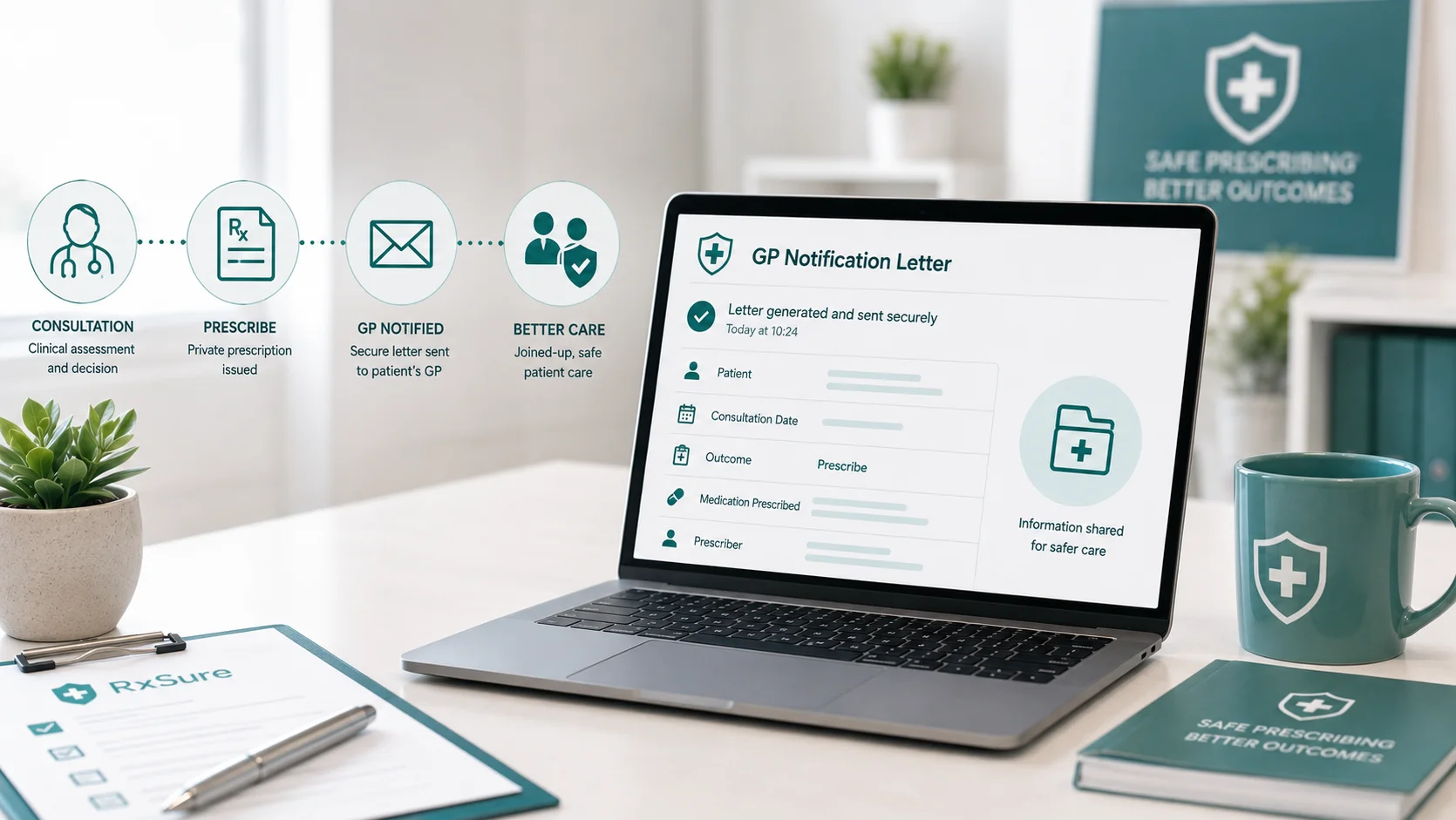
Every private prescription written by a pharmacist independent prescriber carries a professional obligation that extends beyond the consultation room. Notifying the patient’s GP is not merely a courtesy, it is a fundamental requirement of safe, joined-up healthcare. Without timely GP notification, critical prescribing information remains siloed, increasing the risk of drug interactions, therapeutic duplication, and fragmented patient care.
The General Pharmaceutical Council (GPhC) Standards for Pharmacy Professionals and the Royal Pharmaceutical Society (RPS) Competency Framework both emphasise the importance of communication with other healthcare providers. For pharmacist independent prescribers operating through private prescribing platforms, GP notification letters represent a vital link in the chain of clinical governance and patient safety.
Why GP Notification Is a Professional and Clinical Obligation
When a pharmacist independent prescriber issues a private prescription, that clinical decision becomes part of the patient’s broader healthcare journey. The GP, as the patient’s primary care provider, maintains the most comprehensive medical record. Without notification, the GP remains unaware of medications prescribed privately, creating dangerous gaps in the patient’s medical history.
Consider a patient prescribed a POM treatment through a private consultation. If the GP subsequently prescribes a medication with a significant interaction, and no notification letter was sent, the consequences could be severe. GP notification is not bureaucratic box-ticking, it is a clinical safety mechanism that protects both the patient and the prescriber.
Professional indemnity insurers increasingly expect evidence of GP communication as standard practice. In the event of a complaint or clinical incident, the absence of a GP notification letter can significantly weaken the prescriber’s position. Regulators view consistent GP notification as a marker of competent, responsible prescribing practice.
What Information to Include in GP Letters
A well-structured GP notification letter should contain all the information the GP needs to update the patient’s record accurately. The letter must be clear, concise, and professionally formatted. Essential elements include:
- Patient identification: Full name, date of birth, address, and NHS number where available
- Consultation date and type: When the consultation took place and whether it was face-to-face, telephone, or video
- Presenting complaint: The reason the patient sought a private consultation
- Clinical assessment findings: Key examination findings, observations, and relevant history
- Prescribing decision and rationale: What was prescribed, the dose, duration, and why this treatment was selected
- Outcome: Whether the consultation resulted in a prescription (Prescribe), clinical advice without medication (Advise), or onward referral (Refer)
- Follow-up plan: Any recommended monitoring, review dates, or actions for the GP
- Prescriber details: Full name, GPhC registration number, and contact information
The letter should be written in professional clinical language whilst remaining accessible. Avoid jargon that might cause confusion, and ensure the prescribing rationale is clearly articulated so the GP understands the clinical reasoning behind the decision.
Timing: When to Notify Before, During, and After Prescribing
The timing of GP notification depends on the clinical situation and the urgency of the prescribing decision. In most routine private prescribing scenarios, notification should occur within 48 hours of the consultation. However, certain situations demand more immediate communication.
Before Prescribing
In some cases, it is appropriate to contact the GP before prescribing, particularly when the patient has complex comorbidities, is taking multiple medications, or when the proposed treatment might affect ongoing NHS care. A brief telephone call or secure message can prevent prescribing conflicts and demonstrate collaborative practice.
Concurrent Notification
For straightforward consultations, the GP letter can be generated at the point of prescribing and sent the same day. Digital platforms that automate letter generation make concurrent notification practical and efficient, removing the administrative burden that often causes delays.
Post-Prescribing Follow-Up
If additional clinical information becomes available after the consultation, such as follow-up outcomes or adverse effects reported by the patient, a supplementary notification should be sent. Ongoing communication demonstrates thorough clinical care and strengthens the shared care relationship.
Patient Consent for Information Sharing
Before sharing clinical information with the GP, the prescriber must obtain the patient’s informed consent. Most patients understand and welcome GP notification, recognising it as part of safe healthcare. However, some patients may have specific reasons for requesting confidentiality, for example, sensitive conditions they have not disclosed to their GP.
The prescriber must explain why GP notification is important for safety whilst respecting patient autonomy. If a patient withholds consent, this must be documented clearly in the consultation record, along with the risks explained to the patient. The prescriber should carefully consider whether it is safe to prescribe without GP notification and document the clinical reasoning for proceeding or declining.
Consent for GP notification should be obtained during the pre-screening stage and confirmed during the consultation. A well-designed booking workflow captures this consent systematically, ensuring no consultation proceeds without a clear record of the patient’s decision regarding information sharing.
Automating GP Correspondence with Digital Platforms
Manual GP notification, printing letters, addressing envelopes, posting or faxing, is time-consuming and error-prone. Letters get delayed, lost, or forgotten entirely. For pharmacist independent prescribers managing multiple consultations, manual correspondence becomes an unsustainable administrative burden.
Modern private prescribing platforms solve this problem through automated GP letter generation. When a prescriber completes a consultation and records the outcome, whether Prescribe, Advise, or Refer, the platform automatically generates a professionally formatted GP notification letter populated with all relevant clinical data from the consultation record.
Key automation features include:
- Auto-populated templates: Patient details, consultation findings, and prescribing decisions pulled directly from the consultation record
- Customisable letter formats: Professional formatting that meets clinical correspondence standards
- Delivery tracking: Confirmation that letters have been generated, sent, and received
- Audit trail: Complete record of when each GP letter was created and dispatched, supporting GPhC inspection preparation
Automation transforms GP notification from a burdensome task into a smooth part of the prescribing workflow, ensuring consistent compliance without manual effort.
Templates and Best Practice Examples
A standardised GP letter template ensures consistency and completeness across all consultations. Best practice templates follow a structured format that GPs recognise and can process efficiently. The letter should open with clear patient identification, state the purpose of the correspondence, present the clinical information in logical order, and close with the prescriber’s details and contact information.
Effective templates strike the right balance between comprehensiveness and brevity. GPs receive large volumes of correspondence and appreciate letters that communicate essential information without unnecessary padding. Bullet points for key clinical details, clear headings, and a structured layout all contribute to letters that are read and acted upon rather than filed unread.
Regular review of GP letter templates ensures they remain aligned with evolving regulatory expectations and clinical best practice. Feedback from GPs about the usefulness and clarity of notification letters can drive continuous improvement in communication quality.
RxSure’s prescribing platform automates GP notification letters as part of every consultation workflow. From the moment a prescriber records their clinical decision, the platform generates, formats, and tracks GP correspondence, ensuring every private prescription is communicated to the patient’s doctor without delay or manual effort.
Discover how RxSure automates GP notification letters for pharmacist independent prescribers.