
Pharmacy Prescription Collection and Delivery Services Guide
Set up efficient prescription collection and delivery services. Learn route planning, documentation requirements, and operational best practices.

The care home needs their weekly medications. The housebound patient cannot collect their prescription. The busy professional wants delivery to their workplace. Prescription collection and delivery extends pharmacy reach.
Collection services connect pharmacy to patients who cannot visit. But managing collections efficiently requires systems. Routes to plan. Signatures to capture. Handovers to document.
Types of Collection Services
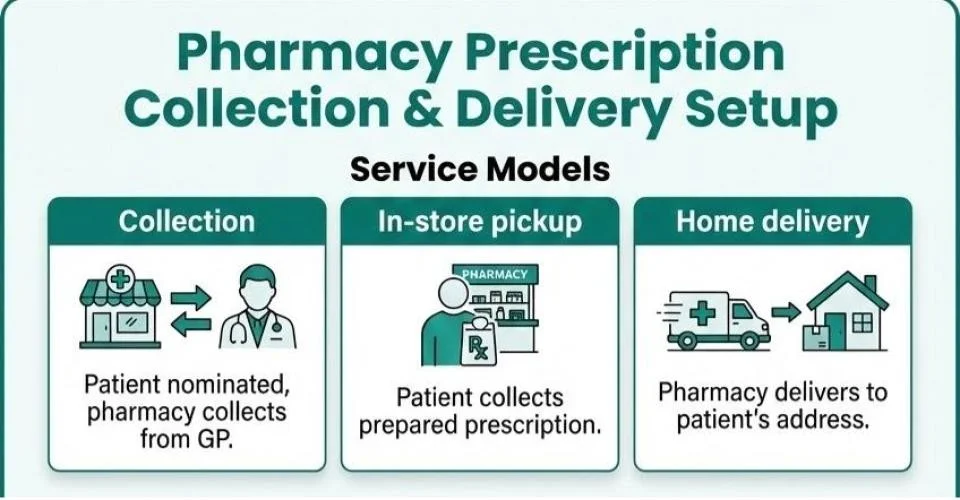
Prescription collection and delivery services have become essential offerings for UK community pharmacies, driven by changing patient expectations and competitive pressure from online-only pharmacy operators. The COVID-19 pandemic permanently shifted patient behaviour: NHS Digital data shows that online pharmacy usage increased significantly during 2020 to 2021, and many patients now expect the same convenience from their local pharmacy that they receive from online retailers. For elderly patients, those with mobility issues, working professionals unable to visit during pharmacy hours, and patients in rural areas with limited transport, a reliable delivery service can be the deciding factor in pharmacy choice. Community pharmacies that offer prescription delivery retain patients who might otherwise switch to online-only competitors, while also creating opportunities for additional clinical interactions during delivery, such as medication reviews, adherence checks, and clinical service promotion. The service can be offered free as a loyalty and retention tool, or as a paid service typically charging £3–5 per delivery, depending on the pharmacy’s commercial strategy and local competitive landscape.
GP Surgery Collection
Collecting prescriptions from GP surgeries for patients. Saves patient journey. Requires GP agreement. Regular collection rounds. Prescription tracking from collection to dispensing.
Care Home Services
Regular medication supply to care homes. Weekly or monthly cycles. Compliance aids often required. Detailed documentation. Staff training on administration.
Home Delivery
Delivering dispensed medications to patient homes. Particularly valuable for elderly, disabled, or housebound patients. Signature on receipt. Secure handover protocols.
Operational Requirements
Setting up a pharmacy prescription delivery service requires careful planning around logistics, compliance, and patient communication to ensure medicines reach the right patient safely and efficiently. The GPhC requires that all medicines are delivered securely with appropriate measures to verify the identity of the recipient and maintain the cold chain for temperature-sensitive products such as insulin and certain vaccines. Key operational decisions include defining your delivery radius, which most pharmacies set at three to five miles for cost-effectiveness, choosing between in-house delivery using pharmacy staff or a dedicated driver and outsourcing to a specialist medical courier service, and establishing delivery time windows that balance patient convenience with operational efficiency. Standard operating procedures must cover packaging requirements including tamper-evident bags and appropriate labelling, signature or proof-of-delivery protocols, handling of controlled drugs which require specific delivery documentation under the Misuse of Drugs Regulations, and procedures for failed deliveries including secure storage and re-delivery arrangements. A digital booking system allows patients to request deliveries online and track their prescription status.
Route Planning
Efficient routes save time and fuel. Group collections and deliveries by area. Consider traffic patterns. Balance efficiency against service commitments.
Vehicle Requirements
Appropriate vehicles for medication transport. Temperature control for cold chain items. Secure storage during transit. Insurance and compliance considerations.
Staff Training
Drivers need specific training. Patient confidentiality. Medication handling. What to do if patient not home. Recognising safeguarding concerns.

Documentation and Tracking
Technology plays a crucial role in making pharmacy prescription delivery services operationally viable and financially sustainable. Manual delivery coordination using paper lists and telephone calls becomes unmanageable once a pharmacy handles more than ten to fifteen deliveries per day, and the administrative overhead can quickly erode any revenue or retention benefit. Modern pharmacy delivery management involves several technology components: an online ordering or request system where patients can indicate their delivery preference when ordering repeat prescriptions, route optimisation software that groups deliveries by geographic area to minimise driving time and fuel costs, real-time tracking that allows patients to see when their delivery is expected similar to food delivery apps, proof-of-delivery capture through digital signatures or photograph confirmation, and integration with the pharmacy dispensing system to ensure accurate picking and packing. For pharmacies also offering private prescribing services through a platform like RxSure, delivery management can be integrated into the consultation workflow so that patients prescribed medication during an online consultation can have it dispensed and delivered without a separate pharmacy visit.
Chain of Custody
Track prescriptions from collection to delivery. Who collected. When dispensed. Who delivered. Who received. Complete audit trail.
Proof of Delivery
Capture signature on delivery. Note if left with alternative person. Record failed delivery attempts. Maintain delivery records.

Further Reading
- → Platform Features, Booking, dispensing workflows, and patient management
- → For Pharmacy Owners, Private services for community pharmacies
- → For Online Pharmacies, Distance selling compliance and e-prescribing
- → Pricing Plans, All-inclusive flat monthly pricing
Extend Your Reach
Collection and delivery services differentiate your pharmacy. Convenience for patients. Additional revenue streams. Stronger patient relationships.
RxSure supports collection services with route planning, delivery tracking, and signature capture. Efficient collection management.
Start your free trial and optimise your collection services.