

Pharmacist CPD and Revalidation: Meeting Requirements
Meet pharmacist CPD and revalidation requirements. Understand the framework, plan effective learning, and maintain your registration.

Revalidation deadline approaching. CPD records incomplete. Peer discussions not documented. Reflective accounts not written. The annual scramble to demonstrate ongoing competence.
CPD and revalidation are professional requirements, not optional extras. The GPhC expects ongoing learning throughout your career. Demonstrating this learning is condition of remaining registered.
Understanding Revalidation
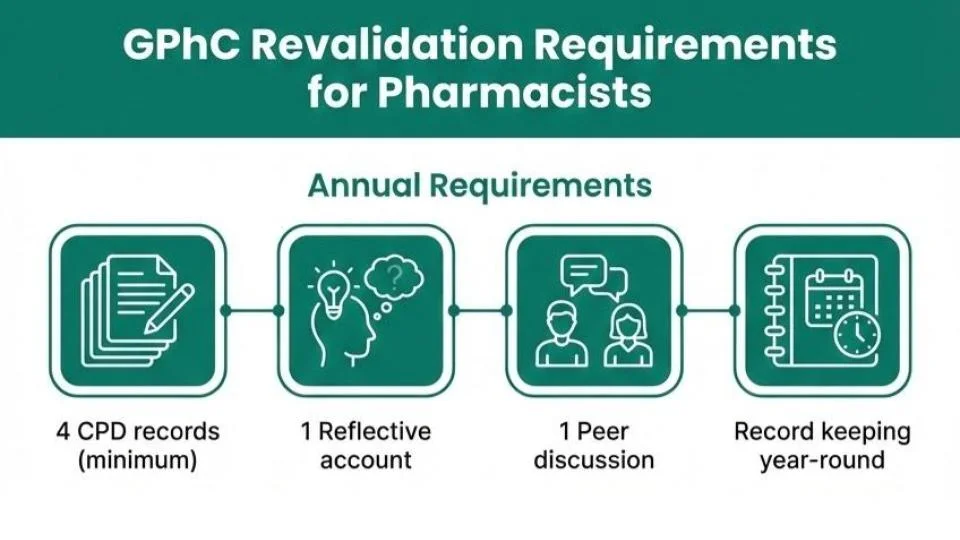
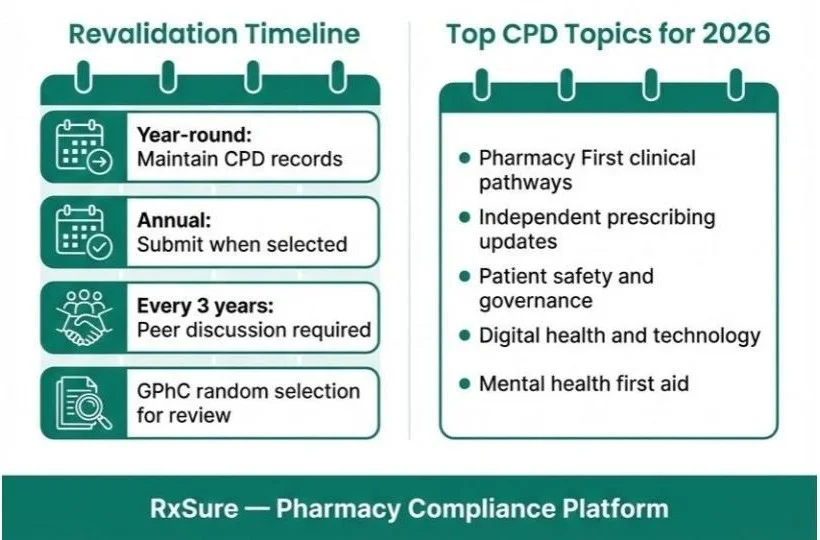
GPhC revalidation is the process by which registered pharmacists and pharmacy technicians demonstrate their continued fitness to practise, and it has been a mandatory requirement since 2018. Every registrant must submit a revalidation portfolio annually when renewing their registration, consisting of four CPD records covering a range of practice activities, a reflective account describing how professional standards have been applied, and a peer discussion record confirming a structured conversation with another registered professional about their practice. The GPhC assesses a sample of portfolios each year and can request additional information if submissions do not meet the required standard. Failure to submit a compliant portfolio can result in removal from the register. For pharmacist independent prescribers offering private clinical services, revalidation is particularly important because it provides the opportunity to demonstrate ongoing competence in prescribing, clinical assessment, and specialist service areas. Digital practice platforms that automatically generate audit reports, consultation logs, and prescribing data provide ready-made evidence for CPD entries, significantly reducing the administrative burden of portfolio preparation.
Requirements
Four CPD records per year minimum. One peer discussion annually. One reflective account annually. All submitted by your renewal date. Miss the deadline and registration is at risk.
CPD Records
Document your learning using the GPhC framework. What did you learn? Why was it relevant? How will it improve your practice? What was the outcome?
Peer Discussion
Structured conversation with a peer about your practice. Not casual chat. Documented discussion. Reflection on your development. Identified learning needs.
Effective CPD Planning
Writing effective CPD entries for GPhC revalidation requires a structured approach that demonstrates genuine learning and its impact on practice rather than simply listing courses attended. The GPhC recommends using a reflective cycle framework covering what happened, what you learned, and how it changed your practice. Strong CPD entries share several characteristics: they describe a specific learning need identified through clinical practice rather than a generic topic, they detail the learning activity undertaken including its source and evidence base, they explain how the learning was applied in practice with concrete examples, and they evaluate the impact on patient outcomes or service quality. For pharmacists offering private prescribing services through platforms like RxSure, excellent CPD material is generated naturally through clinical practice, for example, reflecting on a complex prescribing decision, evaluating the outcomes of a new service launch, or analysing consultation patterns to identify areas where additional clinical knowledge would improve patient care. Aim to spread your four entries across different aspects of practice to demonstrate breadth of professional development.
Learning Needs Assessment
Identify gaps in your knowledge and skills. Changes in practice requiring new learning. Service developments. Personal development goals. Plan learning to address needs.
Learning Opportunities
Learning happens everywhere. Formal courses and conferences. Reading journals and guidelines. Learning from incidents. Discussing cases with colleagues. Everyday practice generates learning.
Recording as You Go
Do not save CPD recording for year end. Document learning when it happens. Fresh reflection is more meaningful. Spread recording throughout the year.

Quality Over Quantity
The peer discussion and reflective account components of GPhC revalidation require careful preparation but provide valuable professional development beyond mere compliance. Your reflective account should describe how you have applied the GPhC Standards for Pharmacy Professionals in your practice over the previous year, selecting specific examples that demonstrate person-centred care, professional judgement, and communication skills. The peer discussion must be conducted with a pharmacist or pharmacy technician who is also registered with the GPhC, this cannot be a line manager conducting a performance review but should be a genuine professional conversation between equals about practice challenges and development needs. Prepare for the discussion by reviewing your CPD records, identifying themes or challenges from your clinical work, and considering areas where you would benefit from a colleague’s perspective. The GPhC provides a structured template for recording the discussion, which should capture the topics covered, key insights gained, and any agreed actions for future development. Many pharmacists find that participating in peer discussion groups or clinical networks provides both revalidation evidence and ongoing professional support.
Meaningful Reflection
Four thoughtful records beat twenty superficial ones. Deep reflection on significant learning. Clear connection to improved practice. Evidence of actual change.
Relevant Learning
CPD should relate to your practice. Not random topics that interest you. Learning that makes you better at what you do. Focused professional development.
Supporting Your Team
Team Development
Pharmacy owners and managers should support team CPD. Protected time for learning. Access to training resources. Culture that values development.
Peer Support
Facilitate peer discussions within your team. Create opportunities for professional conversation. Share learning across the pharmacy.
Further Reading
- → Platform Features, Audit reports and consultation logs for CPD evidence
- → For Pharmacy Owners, Staff training records and compliance tracking
- → For Prescribers, Tools for independent prescriber practice
- → Pricing Plans, Start your free trial today
Continuous Development
CPD and revalidation ensure pharmacists maintain competence throughout their careers. Systematic approach makes compliance straightforward.
RxSure tracks staff CPD and training. Monitor compliance, schedule reviews, and support professional development.
Start your free trial and manage team development.