
TL;DR: Reduce pharmacy no-shows with proven strategies. Learn why patients miss appointments and implement systems that improve attendance rates.
The consultation room is ready. The pharmacist is prepared. The appointment slot is blocked. But the patient never arrives.
No-shows cost pharmacies significantly. Not just in lost service fees, but in wasted preparation time, missed opportunities to help patients, and scheduling disruption. National data suggests healthcare no-show rates range from 15 to 30 percent, representing enormous inefficiency across the system.
Understanding why patients miss appointments and implementing strategies to improve attendance can dramatically improve pharmacy service delivery.
Why Patients Miss Appointments
Forgetting
The simplest explanation is often correct: patients simply forget. In busy lives filled with competing demands, a pharmacy appointment booked two weeks ago can easily slip from memory.
Contributing factors include long lead time between booking and appointment, no reminder communication, appointment not recorded in the patient calendar, and competing personal and work commitments.
Life Circumstances
Even remembered appointments get missed when life intervenes. Acute illness sometimes ironically is the condition the appointment addresses. Family emergencies arise. Work demands take priority. Transport problems occur. Childcare issues emerge. Weather conditions prevent travel.
Perceived Irrelevance
Patients may decide the appointment is no longer needed. Symptoms resolved. They sought help elsewhere. They changed their mind about the service. Fear or anxiety about the consultation developed. They obtained medication or advice through other means.
Barriers to Attendance
Practical obstacles prevent attendance including travel difficulties, appointment time becoming inconvenient, financial concerns for paid services, physical accessibility issues, and caring responsibilities.
Poor Experience History
Previous negative experiences reduce motivation to attend. Long waits despite appointments frustrate patients. Feeling rushed or dismissed leaves negative impressions. Outcomes not meeting expectations disappoint. Difficult rebooking experiences deter future attendance.
The Impact of No-Shows
Financial Impact
For fee-based services, no-shows mean direct revenue loss from unfilled appointments, staff time costs with no return, and overhead costs for unused capacity.
For NHS-commissioned services, target achievement is affected, potential contract implications arise, and efficiency metrics suffer.
Operational Impact
Schedule disruption affects workflow. Staff frustration increases. Planning becomes difficult. Resources remain underutilised.
Patient Impact
Patients miss opportunities for health improvement. Conditions potentially worsen. Relationships with the pharmacy weaken. Other patients are denied slots that could have served them.
Strategies for Reducing No-Shows
Strategy 1: Effective Reminder Systems
Reminders are the single most effective no-show intervention.
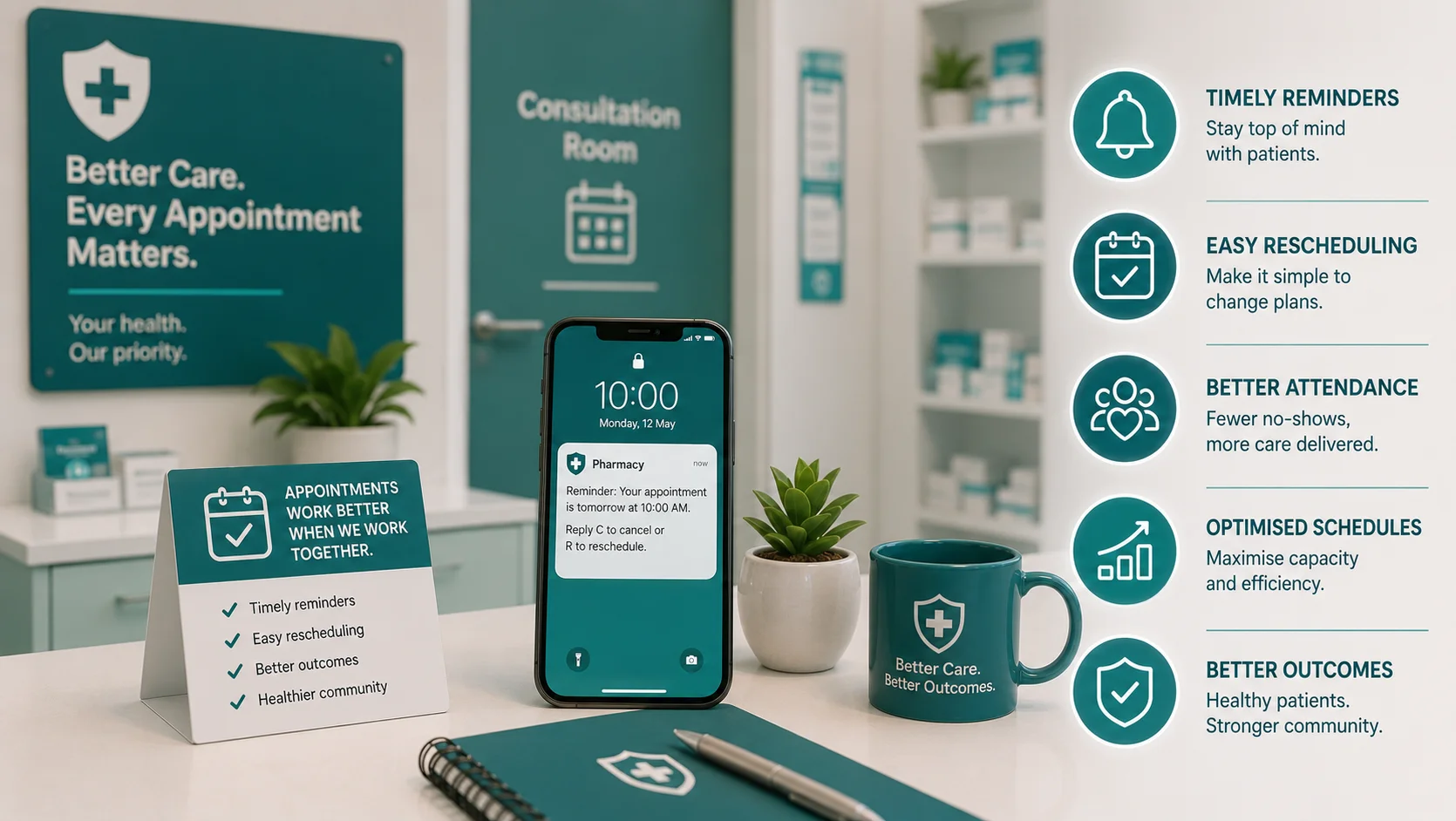
Timing: Send booking confirmation immediately. First reminder 48 to 72 hours before. Second reminder same day in the morning.
Channels: SMS has highest open rates. Email works for detailed information. Phone is most personal but most resource intensive. App notifications work if you have a patient app.
Content: Date, time, and location clearly stated. What to bring or prepare. Easy cancellation or reschedule option. Consequence of non-attendance if applicable.
Automation: Remove reliance on staff remembering to send. Consistent messaging every time. Scalable to any volume. Track delivery and response.
Strategy 2: Easy Cancellation and Rescheduling
Make it simple to cancel with one-click cancellation from reminder, no-questions-asked policy, immediate slot release for others, and easy rebooking options.
Counterintuitively, making cancellation easy reduces no-shows. Patients who would otherwise just not turn up will cancel if it is easy, freeing slots for others.
Strategy 3: Optimal Booking Lead Time
Long lead times increase no-shows. Where possible, offer appointments within one to two weeks. For longer waits, implement waiting list management. Send additional reminders for longer lead times. Consider overbooking strategies for high no-show services.
Strategy 4: Patient Engagement
Engaged patients attend more reliably. Explain the importance of the appointment. Discuss what will happen and expected benefits. Address concerns and barriers proactively. Build ongoing relationships beyond single appointments.
Strategy 5: Barrier Reduction
Identify and address attendance barriers.
Timing flexibility: Offer extended hours options, weekend availability, and multiple time slots to choose from.
Accessibility: Provide clear directions and parking information, public transport guidance, and confirm wheelchair accessibility.
Financial clarity: Communicate clear pricing upfront, explain payment options, and clarify NHS entitlements.
Strategy 6: Overbooking Management
For services with predictable no-show rates, book slightly above capacity based on historical rates. Have processes for managing when all patients do attend. Use cancellation lists to fill late gaps. Balance overbooking against patient experience.
This strategy requires careful calibration. Too much overbooking creates its own problems.
Strategy 7: No-Show Policies
Clear policies set expectations. Communicate policy at booking. Implement consistently. Consider rebooking requirements after no-shows. Consider fees for repeated no-shows for private services. Balance firmness with compassion because life happens.
Implementing a No-Show Reduction Programme
Step 1: Understand Your Current State
Measure before improving. Track current no-show rate by service, patterns by days, times, and patient types, reasons when known, and financial impact quantified.
Step 2: Implement Quick Wins
Start with highest-impact, lowest-effort interventions. Automated reminders have the biggest single impact. Easy cancellation options help. Same-day reminder messages reinforce attendance.
Step 3: Address Specific Patterns
Target identified problems. If certain services have high no-shows, investigate specific barriers. If certain times have high no-shows, consider offering different times. If certain patient groups have high no-shows, tailor engagement approaches.
Step 4: Monitor and Refine
Track impact and adjust. Measure no-show rates ongoing. Test different reminder approaches. Gather patient feedback on barriers. Continuously improve.
Maximise Your Appointment Value
Every missed appointment represents a patient who could have received care and a slot that could have served someone else. Systematic no-show reduction benefits patients, pharmacies, and the healthcare system.
RxSure includes automated appointment reminders with SMS and email capability. Reduce your no-shows while reducing staff time spent on manual reminder calls.
Start your free trial and reduce your no-shows today.
About this article: This article was prepared by the RxSure editorial team and is informed by publicly available UK healthcare guidance. Source references include GPhC, NICE, and BNF where cited. Content is reviewed periodically to reflect current information. This article is for general informational purposes and should not be relied upon as professional, medical, or regulatory advice. Last updated: 4 July 2026.