
Prescribing Safety for Pharmacist Independent Prescribers: Complete Guide
Comprehensive guide to prescribing safety for pharmacist independent prescribers. Error prevention, clinical checks, and digital tools to prescribe safely.

Every prescription carries risk. A decimal point in the wrong place, an overlooked allergy, a missed interaction, prescribing errors remain one of the most significant patient safety concerns in healthcare. For pharmacist independent prescribers working in private practice, the responsibility is both profound and personal. Unlike hospital settings with multiple layers of verification, private prescribers often work with fewer safety nets. Understanding where errors originate and building robust defences is not optional, it is the foundation of safe clinical practice.
Research published by the General Medical Council and the Royal Pharmaceutical Society consistently highlights that prescribing errors occur across all healthcare settings. The EQUIP study found that foundation year doctors made prescribing errors in nearly nine per cent of prescriptions. Pharmacist independent prescribers, whilst benefiting from their medication expertise, are not immune to these risks. The key difference lies in awareness, systems, and the deliberate application of safety practices at every stage of the prescribing process.
The Safety Imperative: Why Prescribing Errors Happen
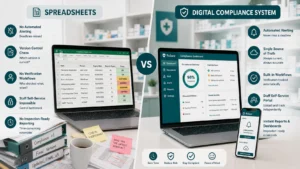
Clinical safety in private prescribing depends on systematic processes that prevent prescribing errors, identify drug interactions before medications are issued, and ensure patients receive appropriate monitoring and follow-up care. The most common prescribing errors in the UK include incorrect dosage calculations particularly for weight-based medications and paediatric formulations, failure to identify contraindications based on the patient’s medical history or concurrent medications, prescribing medications to which the patient has a documented allergy, and inadequate safety netting advice about when to seek urgent medical attention. Digital prescribing platforms significantly reduce these risks through automated drug interaction checking against the patient’s complete medication record, allergy alert systems that flag documented sensitivities before a prescription can be generated, dose range checking that warns when prescribed quantities fall outside BNF recommended limits, and structured consultation workflows that enforce mandatory clinical checkpoints including contraindication screening, pregnancy status assessment where relevant, and baseline observations. These automated safety features complement rather than replace clinical judgement.
Prescribing errors rarely stem from a single cause. They emerge from the convergence of human factors, system failures, and knowledge gaps. Human factors include fatigue, cognitive overload, time pressure, and confirmation bias, the tendency to see what you expect rather than what is actually present. A prescriber rushing through a busy clinic may skip the allergy check that would have prevented a serious reaction.
System failures encompass inadequate access to patient records, poor communication between healthcare providers, and technology that hinders rather than helps. When a pharmacist prescriber cannot access a patient’s complete medication history, the risk of a harmful interaction rises dramatically. Knowledge gaps, meanwhile, reflect the reality that no clinician can know everything about every medicine. Keeping prescribing knowledge current requires deliberate, ongoing effort.
Understanding these root causes is the first step toward prevention. Safe prescribing is not about perfection, it is about building systems and habits that catch errors before they reach the patient.
Common Prescribing Errors and How to Prevent Them
Incident reporting and learning from prescribing errors are essential components of clinical governance for any prescribing service, whether pharmacy-based or clinic-based. The duty of candour requires healthcare professionals to inform patients promptly when something has gone wrong with their care, provide a full explanation of what happened and why, apologise, and take steps to prevent recurrence. Prescribing incidents should be categorised by severity, investigated using root cause analysis methodology, and documented with clear learning outcomes that are shared across the prescribing team. The Yellow Card scheme operated by the MHRA should be used to report suspected adverse drug reactions, contributing to national pharmacovigilance monitoring. Digital platforms support incident management by providing structured reporting templates, automatic notification to the responsible pharmacist or clinical lead, tracking of investigation timelines and corrective actions, and audit reports demonstrating that learning has been implemented. Regular prescribing audits reviewing patterns, outliers, and near-miss reports help identify systemic issues before they result in patient harm.
Wrong Dose Errors
Dose errors are the most frequently reported prescribing mistakes. They include prescribing too much, too little, or failing to adjust doses for renal impairment, hepatic dysfunction, age, or body weight. Prevention requires a systematic approach: always check the recommended dose range in the British National Formulary (BNF), consider the individual patient’s characteristics, and verify calculations, particularly for medicines with narrow therapeutic indices such as warfarin, digoxin, and methotrexate.
Wrong Drug Errors
Selecting the wrong medicine often results from similar drug names, familiarity with a preferred choice, or cognitive shortcuts. Look-alike and sound-alike (LASA) medicines pose particular risks. Amlodipine and amitriptyline, chlorpromazine and chlorpropamide, these pairs have caused documented patient harm. Using generic names consistently, reading the full drug name rather than scanning the first few letters, and using clinical decision support tools all reduce this risk significantly.
Drug Interaction Errors
Interactions between medicines can reduce efficacy, increase toxicity, or cause entirely new adverse effects. The risk multiplies with polypharmacy. Every new prescription should be checked against the patient’s existing medication list. High-risk combinations, such as macrolide antibiotics with statins, or NSAIDs with anticoagulants, require particular attention. Digital interaction checking tools provide a valuable safety layer, but they must complement clinical judgement rather than replace it.
Allergy-Related Errors
Prescribing a medicine to which a patient has a documented allergy is a never event, it should never happen. Yet it does, repeatedly. The defence is straightforward: always ask about allergies at every consultation, always check documented allergies before prescribing, and always record allergy information prominently. Cross-reactivity between drug classes, such as penicillins and cephalosporins, adds complexity that requires careful clinical assessment.
The Role of Clinical Decision Support in Safe Prescribing
Clinical decision support (CDS) systems have changed prescribing safety in hospital settings, and they are equally valuable for independent prescribers. These tools provide real-time alerts for interactions, allergies, dose limits, and contraindications. They embed the Summary of Product Characteristics (SmPC) into the prescribing workflow, ensuring that critical safety information is available at the point of decision.
Effective CDS goes beyond simple alerts. It includes structured prescribing templates that prompt the clinician to complete all necessary checks, pre-populated dose ranges for common conditions, and built-in formulary guidance. For pharmacist independent prescribers using platforms like RxSure, these features are integrated directly into the consultation workflow, reducing reliance on memory and creating a consistent, auditable prescribing process.
However, alert fatigue, the tendency to dismiss warnings when they appear too frequently, is a genuine risk. Systems must be calibrated so that critical alerts are clearly distinguished from informational messages. Prescribers must develop the discipline to read and evaluate every alert, even when time is short.
Allergy Checking, Interaction Screening, and Dose Verification
A systematic approach to safety checks eliminates reliance on memory. Before issuing any prescription, pharmacist independent prescribers should follow a structured process:
- Allergy verification: Confirm documented allergies with the patient. Ask about previous adverse drug reactions, including the nature and severity of the reaction. Record this prominently.
- Medication history: Obtain a complete list of current medicines, including over-the-counter products, supplements, and herbal remedies. Verify this against available records.
- Interaction screening: Check the proposed prescription against all current medicines using a validated interaction checker. Assess the clinical significance of any flagged interactions.
- Dose verification: Confirm the dose is appropriate for the indication, patient age, weight, renal function, and hepatic function. Cross-reference with the BNF.
- Contraindication check: Review the SmPC for contraindications relevant to the individual patient, including pregnancy, breastfeeding, and comorbidities.
This five-step process takes minutes but prevents the errors that cause lasting harm. Making it habitual, not optional, is the mark of a safe prescriber.
Learning from Prescribing Incidents: Significant Event Analysis
When prescribing errors or near misses occur, the response determines whether the same mistake happens again. Significant Event Analysis (SEA) is a structured method for learning from incidents. It involves a thorough, blame-free examination of what happened, why it happened, and what changes will prevent recurrence.
The SEA process follows defined steps:
- Describe the event: What happened, when, and who was involved? Document factually without judgement.
- Identify contributing factors: What systemic, environmental, or human factors contributed? Was the prescriber fatigued? Was information missing? Was the technology inadequate?
- Assess the impact: What was the actual or potential harm to the patient? What was the impact on the prescriber and the service?
- Determine learning points: What does this event teach about the prescribing process? What gaps in knowledge, systems, or procedures does it reveal?
- Implement changes: What specific, measurable actions will prevent recurrence? Who is responsible, and by when?
Building a culture of learning rather than blame is essential. Prescribers who fear punitive responses will conceal errors, and concealed errors cannot be learned from. Open, supportive incident review creates a safer prescribing environment for everyone.
References
- General Pharmaceutical Council. Standards for Pharmacy Professionals. GPhC, 2024.
- National Institute for Health and Care Excellence. NICE Guidelines. NICE, 2024.
- British National Formulary. BNF Online. NICE, 2024.
- Information Commissioner’s Office. Guide to UK GDPR. ICO, 2024.
Technology That Makes Prescribing Safer
Modern prescribing platforms offer a suite of safety features that were unavailable to previous generations of prescribers. RxSure integrates clinical decision support, interaction checking, allergy alerts, and structured consultation templates into a single workflow. Every prescribing decision is documented with a complete audit trail, creating transparency and accountability.
Key technology-driven safety features include:
- Automated interaction checking: Real-time screening of new prescriptions against existing medicines, with severity-graded alerts.
- Allergy alert systems: Prominent display of documented allergies with automatic cross-referencing at the point of prescribing.
- Structured SmPC templates: Embedded product information ensuring prescribers have immediate access to dose ranges, contraindications, and cautions.
- Audit trails: Every clinical decision, check performed, and alert overridden is recorded, supporting governance review and revalidation evidence.
- Outcome tracking: The ability to monitor prescribing outcomes over time, identifying patterns that may indicate systemic issues.
Technology does not replace clinical judgement. It augments it. The combination of an experienced pharmacist prescriber and a well-designed digital platform creates a prescribing environment that is safer, more consistent, and more transparent than either could achieve alone.
Safe prescribing is not a destination, it is a continuous practice. Every consultation, every prescription, every clinical decision is an opportunity to apply the principles, systems, and tools that keep patients safe. For pharmacist independent prescribers committed to clinical excellence, explore how RxSure’s safety features support your prescribing practice.
Related reading: Drug Allergy Alert Systems in Pharmacy | Drug Interaction Checking in Pharmacy | Dispensing Error Prevention in Pharmacy