

Drug Allergy Alert Systems in Pharmacy: Preventing Fatal Errors
How pharmacy allergy alert systems prevent potentially fatal medication errors. Learn about effective allergy checking and the technology that saves lives.
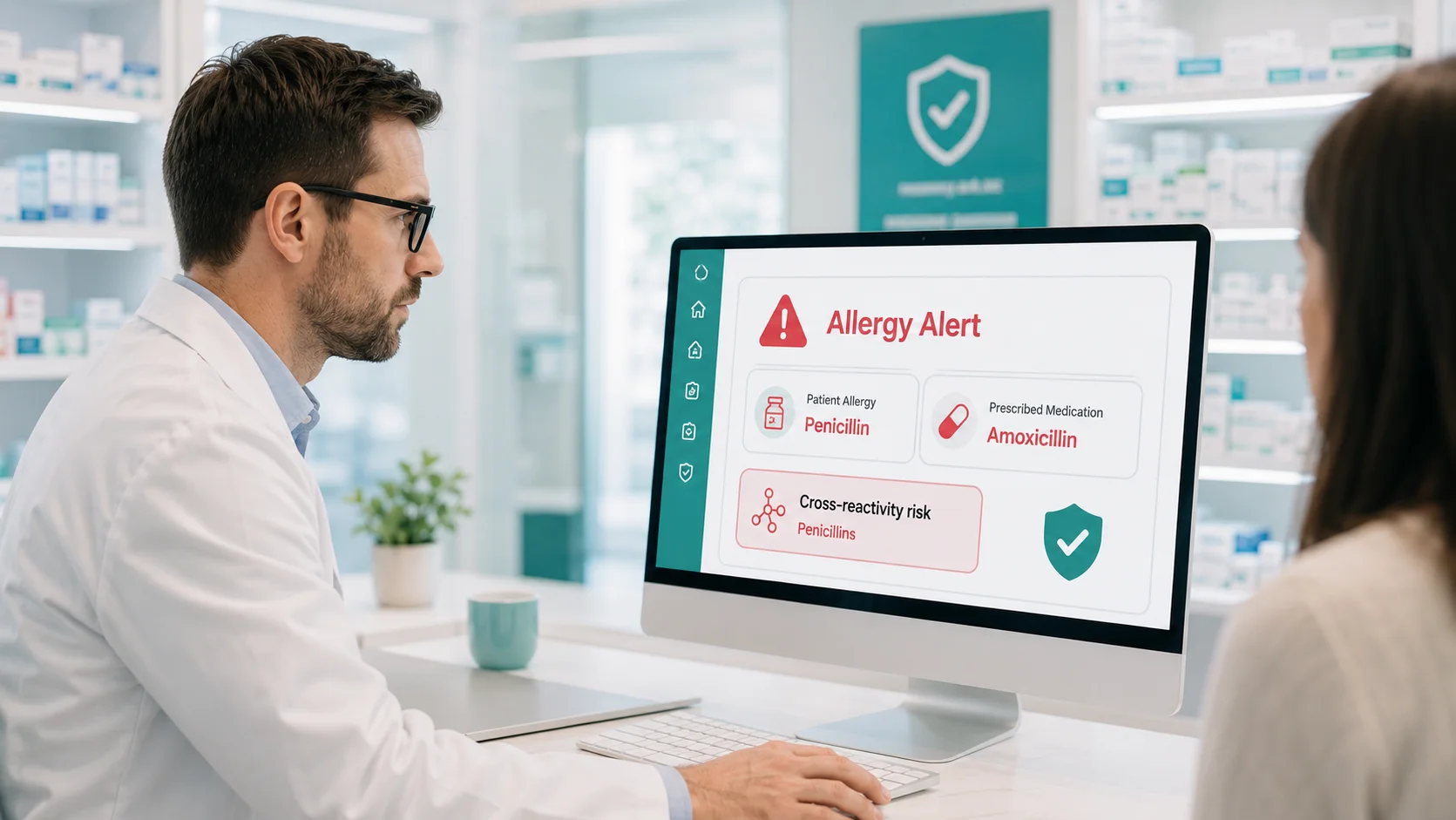
Patient allergy: Penicillin. Prescription: Amoxicillin.
Same antibiotic family. Cross-reactivity risk. Potentially fatal allergic reaction if dispensed.
Without a system that flags this connection, it relies on human memory. The pharmacist remembering to check allergies. Recognising that amoxicillin is a penicillin. Connecting the dots under time pressure with queues building.
Humans are fallible. Systems that flag potential allergy interactions save lives.
Understanding Allergy-Related Medication Errors
The Scale of the Problem
Allergy-related medication errors are among the most preventable yet persistent causes of patient harm. Estimated 30 to 55 percent of adverse drug events are preventable. Allergy status not documented or not checked is a common contributing factor. Penicillin allergies alone affect 10 percent of the population. Cross-reactivity patterns add complexity.
Types of Allergy Errors
Documentation errors: Allergy not recorded, allergy recorded incorrectly, allergy documentation not accessible, and outdated allergy information.
Checking errors: Allergy not checked before dispensing, check performed but alert missed, cross-reactivity not recognised, and alert overridden inappropriately.
Communication errors: Patient not asked about allergies, patient information not understood, allergy information not transferred between providers, and warning not communicated to patient.
Essential Components of Allergy Safety
Component 1: Accurate Documentation
The foundation of allergy safety is accurate, accessible records.
What to document: Substance causing reaction, type of reaction such as anaphylaxis or rash or GI upset, severity from mild to life-threatening, date of reaction if known, and certainty whether confirmed or suspected or self-reported.
Where to document: Patient medication record, visible in dispensing workflow, flagged prominently in patient record, and communicated in prescription requests.
Maintenance: Regular verification with patient, updates when new allergies identified, review of historical allergies as some may be resolved, and clarification of vague entries.
Component 2: Systematic Checking
Allergy checking must be systematic, not reliant on memory.
Automatic checking: System compares prescribed medication against recorded allergies. Cross-reactivity databases include related substances. Alerts generated for potential interactions. Checking occurs at every dispensing event.
Manual verification: Verbal confirmation with patient. Do you have any allergies to medications? Particularly important for new patients. Validates electronic records.
Component 3: Effective Alerting
Alerts must be noticed and actionable.
Alert design principles: Visually prominent with colour, position, and size. Clinically meaningful to avoid alert fatigue. Informative about the specific concern. Actionable with clear next steps.
Alert hierarchy: Critical alerts that must be addressed and cannot proceed without action. Significant alerts requiring acknowledgement. Informational alerts for awareness.
Override management: Require reason for override. Document override rationale. Audit overrides for appropriateness. Minimise unnecessary alerts to preserve attention.
Component 4: Cross-Reactivity Intelligence
Drug relationships must be understood.
Common cross-reactivity patterns: Penicillins and cephalosporins have partial cross-reactivity. Sulfonamide antibiotics and other sulfa drugs. NSAIDs including aspirin and others. Opioid structural similarities.
System requirements: Cross-reactivity database maintained and updated. Alerts for related substances, not just exact matches. Severity weighting for different cross-reactivity risks. Clear communication of relationship type.
Building Effective Allergy Systems
Technology Requirements
Patient record system: Allergy recording capability, prominent allergy display, allergy checking integration, and alert generation and display.
Checking database: Comprehensive drug-allergy relationships, cross-reactivity mapping, regular updates with new information, and appropriate sensitivity settings.
Alert interface: Clear alert presentation, override with documentation, audit trail capability, and performance reporting.
Process Requirements
At patient registration: Ask about allergies. Record responses accurately. Clarify vague reports. Document no known allergies if applicable.
At every dispensing: System check against allergies. Response to any alerts. Documentation of actions. Patient counselling on allergy awareness.
Ongoing: Periodic allergy verification. Update when new allergies identified. Review of allergy database. Staff training on allergy recognition.
Managing Alert Fatigue
The Alert Fatigue Problem
Too many alerts cause problems. Clinicians start ignoring all alerts. Important warnings lost in noise. Override becomes automatic rather than considered. Patient safety compromised by safety systems.
Preventing Alert Fatigue
Minimise unnecessary alerts: Only alert for clinically significant interactions. Adjust sensitivity appropriately. Suppress alerts for documented therapeutic decisions. Remove outdated allergy entries.
Make alerts meaningful: Clear explanation of the risk. Appropriate severity indication. Relevant clinical information. Actionable recommendations.
Audit override patterns: Monitor override rates. Investigate high-override alerts. Adjust if alerts are consistently overridden appropriately. Investigate if inappropriate overrides occur.
Staff Training
Knowledge Requirements
Pharmacy staff should understand common drug allergies and their manifestations, cross-reactivity patterns for major drug classes, difference between allergy and intolerance and side effect, and when to override alerts and when to refuse to dispense.
Response Procedures
Clear protocols for what to do when alert appears, how to investigate the alert, documentation requirements, escalation procedures, and patient communication.
Patient Engagement
Verification
Patients are the ultimate source of allergy information. Ask at every significant interaction. Verify recorded information is current. Encourage reporting of new reactions. Clarify the nature of reported allergies.
Education
Help patients understand importance of carrying allergy information, difference between allergy and side effect, need to report to all healthcare providers, and what reactions require immediate medical attention.
Protect Your Patients
Allergy systems are not optional extras. They are fundamental patient safety infrastructure. Every prescription should be checked. Every alert should be meaningful. Every patient should be protected.
RxSure includes integrated allergy checking in consultation workflows. Patient allergies are documented, checked automatically, and flagged clearly when potential interactions exist.
Start your free trial and enhance allergy safety.