
CQC Inspection Requirements for Private Clinics: 2026 Guide
Comprehensive guide to CQC inspection requirements for private healthcare clinics. Understand what inspectors look for and how to prepare your clinic for assessment.

The Care Quality Commission (CQC) regulates all health and social care services in England, including private clinics providing regulated activities. Understanding CQC requirements is essential for clinic registration and ongoing compliance.
Who Needs CQC Registration?
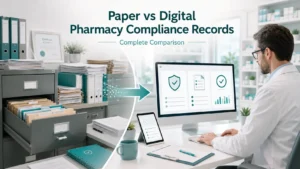
GPhC compliance is a fundamental requirement for every pharmacy providing private prescribing services in the United Kingdom, and digital platforms have become the most effective way to maintain and demonstrate compliance during inspections. The General Pharmaceutical Council evaluates pharmacies against its Standards for Registered Pharmacies, which cover governance, staff competence, premises suitability, service delivery, and patient safety. For private prescribing services, inspectors specifically examine whether consultation records are complete and contemporaneous, whether prescribing decisions are clinically justified and documented, whether standard operating procedures are current and accessible, whether controlled drug registers are accurately maintained, and whether patient complaints are recorded and acted upon. Digital compliance management platforms provide significant advantages over paper-based systems because they create automatic, timestamped audit trails for every clinical action, prevent records from being altered retrospectively, enforce mandatory documentation steps within consultation workflows, and generate inspection-preparation reports that demonstrate ongoing compliance. Pharmacies using structured digital platforms typically report smoother GPhC inspections with fewer follow-up actions required.
CQC registration is required if you provide regulated activities. These include treatment of disease, disorder or injury, diagnostic and screening procedures, surgical procedures, and management of supply of blood and blood-derived products.
Most private healthcare clinics require CQC registration. This includes weight management clinics prescribing medication, aesthetics clinics offering injectable treatments, GP private practices, and specialist consultant clinics.
The CQC Framework – Five Key Questions
Preparing for a GPhC inspection requires systematic review of every aspect of pharmacy operations, from responsible pharmacist records and staff training documentation through to controlled drug registers and clinical governance frameworks. The inspection process typically involves an inspector visiting the pharmacy, reviewing documentation, observing practice, and interviewing staff members about their understanding of procedures and standards. Key areas that generate improvement notices include incomplete consultation records where clinical reasoning is not documented, out-of-date standard operating procedures that do not reflect current practice, gaps in staff training records particularly around safeguarding and clinical competencies, and inadequate incident reporting systems. A digital compliance tools addresses these risks by providing real-time visibility of documentation status, automated alerts when SOPs require review or staff training certificates approach expiry, and structured consultation templates that ensure every required clinical checkpoint is completed and recorded before a prescription can be issued. The dashboard also tracks responsible pharmacist logs, locum records, and equipment calibration schedules in a single audit-ready interface.
CQC inspectors assess services against five key questions:
1. Safe: Are patients protected from abuse and avoidable harm? This covers infection control, medicines management, safeguarding, equipment safety, and incident reporting.
2. Effective: Are outcomes good? Is care evidence-based? Inspectors look at clinical outcomes, use of guidelines, staff competence, and consent processes.
3. Caring: Are patients treated with dignity and compassion? This includes privacy, respect, involvement in decisions, and emotional support.
4. Responsive: Are services organised around patient needs? Covers access, waiting times, complaints handling, and meeting individual needs.
5. Well-led: Is leadership effective? Is there good governance? This examines management structure, quality improvement, staff engagement, and organisational culture.
Key CQC Requirements for Private Clinics
Policies and Procedures
CQC expects documented policies covering safeguarding adults and children, infection prevention and control, medicines management, complaints handling, consent and capacity, information governance, and incident reporting.
Staff Requirements
For every staff member, clinics must demonstrate DBS checks at appropriate level, right to work verification, qualification verification, training records and competency assessments, professional registration checks, and immunisation status for clinical staff.
CQC Inspection Outcomes
Following inspection, CQC rates services as Outstanding, Good, Requires Improvement, or Inadequate. Ratings are published on the CQC website and must be displayed in your premises.
Preparing for CQC Inspection
The best inspection preparation is continuous compliance. Maintain inspection preparation through regular self-assessment against the five key questions and systematic evidence gathering.
Daily: Complete required documentation. Record all clinical activity. Report any incidents.
Weekly: Review outstanding actions. Check compliance toolss. Address any gaps identified.
Monthly: Audit sample records. Review policies due for update. Assess staff training needs.
References
- General Pharmaceutical Council. Standards for Pharmacy Professionals. GPhC, 2024.
- National Institute for Health and Care Excellence. NICE Guidelines. NICE, 2024.
- British National Formulary. BNF Online. NICE, 2024.
- Information Commissioner’s Office. Guide to UK GDPR. ICO, 2024.
Achieve CQC Excellence
RxSure platform supports private clinic compliance with staff documentation management, training tracking, and audit-ready reporting.
Start your free trial and strengthen your CQC compliance.