

Pharmacy Wound Care Services: Assessment and Management
Deliver pharmacy wound care services. Learn about service scope, clinical competence, and appropriate referral pathways.
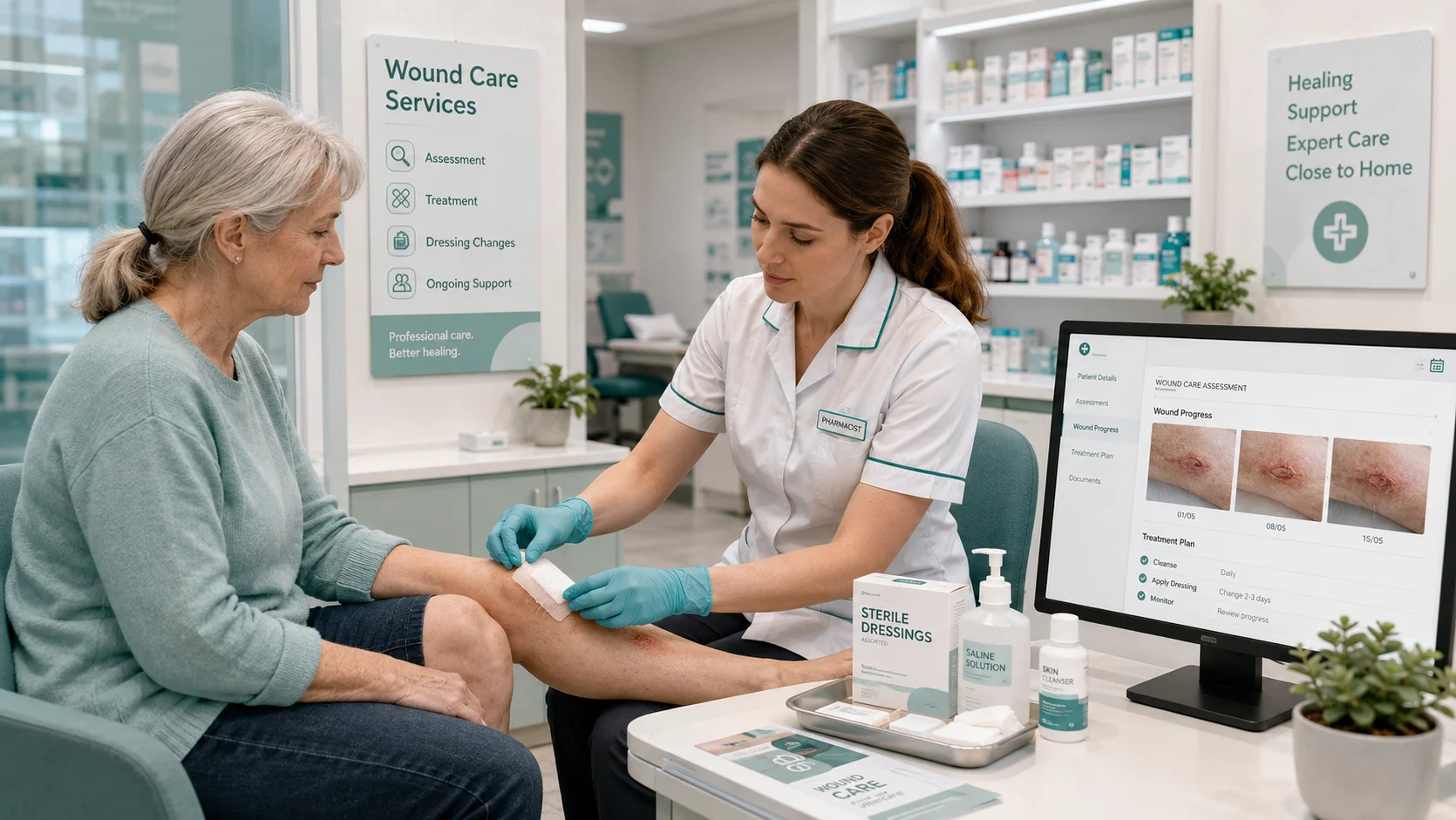
Minor cuts and grazes. Post-surgical wound checks. Leg ulcer management. Wound care is practical healthcare that pharmacies can provide. Accessible, convenient, and professional.
GP appointments are scarce. Practice nurse availability is limited. Pharmacy wound care fills a genuine gap, providing ongoing wound management in accessible community settings.
Service Scope
Community pharmacies are increasingly providing wound care services because they offer accessible, convenient first-line assessment and treatment for minor wounds and skin injuries that would otherwise burden GP practices or minor injuries units. NHS England has recognised the role of pharmacies in managing minor conditions, and the Pharmacy First programme reinforces pharmacies as the appropriate first port of call for patients with uncomplicated wounds, minor burns, insect bites, and skin abrasions. For patients, pharmacy wound care means same-day access without an appointment, no waiting room delays, professional assessment by a trained healthcare professional, and immediate treatment including wound cleaning, dressing application, and advice on signs of infection requiring further medical attention. For pharmacy owners, wound care services complement existing clinical offerings with relatively low equipment costs, a basic wound care kit including dressings, sterile saline, adhesive strips, and basic instruments costs approximately £200–400 to establish. Revenue per wound care consultation typically ranges from £15–35 depending on complexity, and the service builds patient trust that drives engagement with higher-value private services.
Minor Wound Care
Cleaning and dressing minor wounds. Assessing healing progress. Identifying infection signs. Advising on home care. Simple but valuable patient service.
Dressing Changes
Post-operative dressing changes. Ongoing wound management between healthcare appointments. Using appropriate dressing products. Monitoring healing progress.
Chronic Wound Support
Leg ulcer monitoring. Pressure sore assessment. Supporting patients with ongoing wound care needs. Working alongside district nursing services.
Clinical Competence
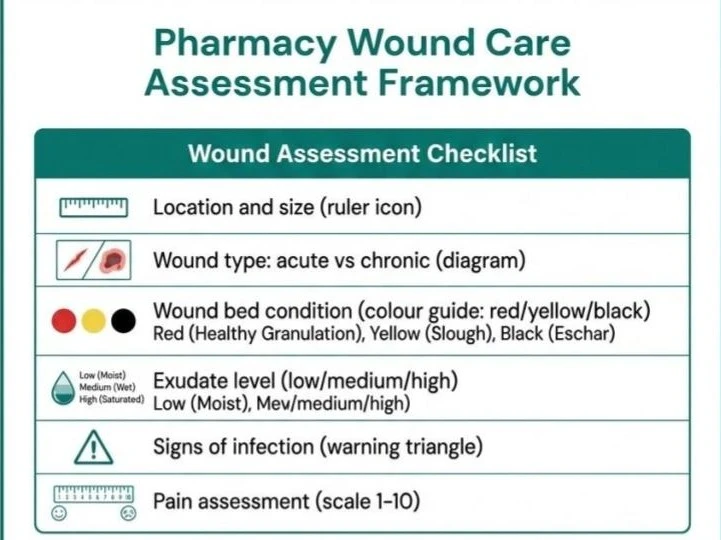
Clinical assessment of wounds in a pharmacy setting follows a structured approach designed to identify wounds suitable for pharmacy management and refer appropriately when specialist care is needed. The initial assessment should evaluate wound type and mechanism of injury, wound dimensions and depth, presence of foreign bodies or contamination, signs of infection including erythema, warmth, swelling, purulent discharge, and surrounding cellulitis, tetanus vaccination status, and the patient’s medical history including diabetes, immunosuppression, and anticoagulant use which may complicate healing. Wounds requiring referral include deep puncture wounds, wounds with embedded foreign material, bites that have broken the skin, wounds showing signs of established infection requiring oral antibiotics, and any wound where underlying structures such as tendons or bone may be involved. For wounds appropriate for pharmacy management, treatment involves thorough cleaning with sterile saline or running water, wound closure with adhesive strips or wound closure strips for minor lacerations, appropriate dressing selection based on wound characteristics, and clear aftercare instructions including signs that should prompt the patient to seek further medical attention.
Training Requirements
Wound assessment skills. Dressing selection knowledge. Infection recognition. Referral criteria understanding. Appropriate training before offering services.
Assessment Skills
Wound type identification. Healing stage assessment. Infection signs recognition. Pain assessment. Underlying condition consideration.
Product Knowledge
Understand dressing categories and indications. Alginates, foams, hydrocolloids, films. Match dressing to wound type and healing stage. Cost-effective selection.
Referral Awareness
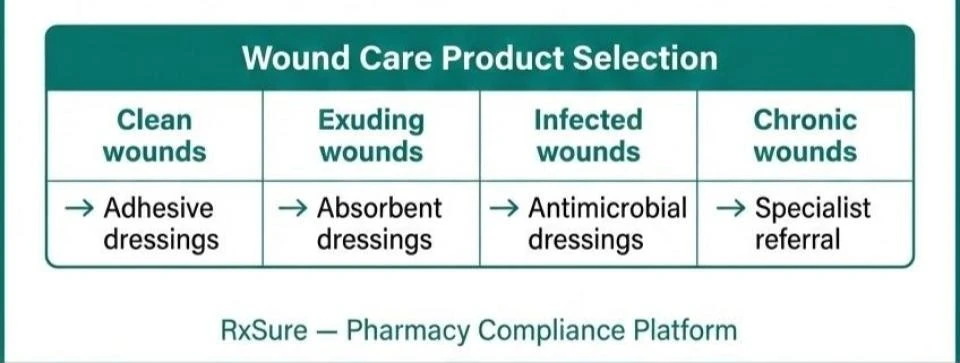
Selecting the appropriate wound dressing is a key clinical skill in pharmacy wound care, as different wound types require different moisture management and healing environment characteristics. The principle of moist wound healing, established by George Winter’s research and now universally accepted in clinical practice, means that most wounds heal faster when kept in a moist environment rather than being allowed to dry out. For clean, superficial wounds and minor abrasions, simple adhesive dressings or film dressings provide protection while allowing moisture vapour transmission. Deeper or exuding wounds benefit from absorbent dressings such as foam or alginate products that manage excess moisture while maintaining a moist wound bed. Hydrocolloid dressings are suitable for light to moderately exuding wounds and can remain in place for several days, reducing the need for frequent dressing changes. For pharmacy consultations involving wound assessment and dressing selection, a digital platform with structured templates ensures consistent documentation of wound characteristics, dressing choice rationale, and follow-up plans, providing an audit trail that demonstrates clinical governance and supports quality improvement.
When to Refer
Signs of spreading infection. Wounds not healing as expected. Underlying conditions requiring medical assessment. Deep or complex wounds beyond pharmacy scope.
Urgent Referral
Signs of sepsis or cellulitis. Bite wounds requiring assessment. Wounds with foreign bodies. Wounds requiring suturing. Know when immediate medical care is needed.

Documentation
Record Keeping
Document wound appearance at each visit. Size, depth, exudate, surrounding skin. Dressing used. Treatment plan. Photographs where appropriate.
Further Reading
- → Platform Features, Consultation templates, patient records, and documentation
- → For Pharmacy Owners, Launch clinical services from your pharmacy
- → All Clinical Services, Explore all service templates available
- → Pricing Plans, Flat monthly fee with no per-consultation charges
Healing Support
Pharmacy wound care provides accessible, professional support for wound healing. Appropriate assessment, treatment, and referral ensure good patient outcomes.
RxSure supports wound care services with assessment documentation and progress tracking. Evidence-based wound management.
Start your free trial and develop wound care services.