

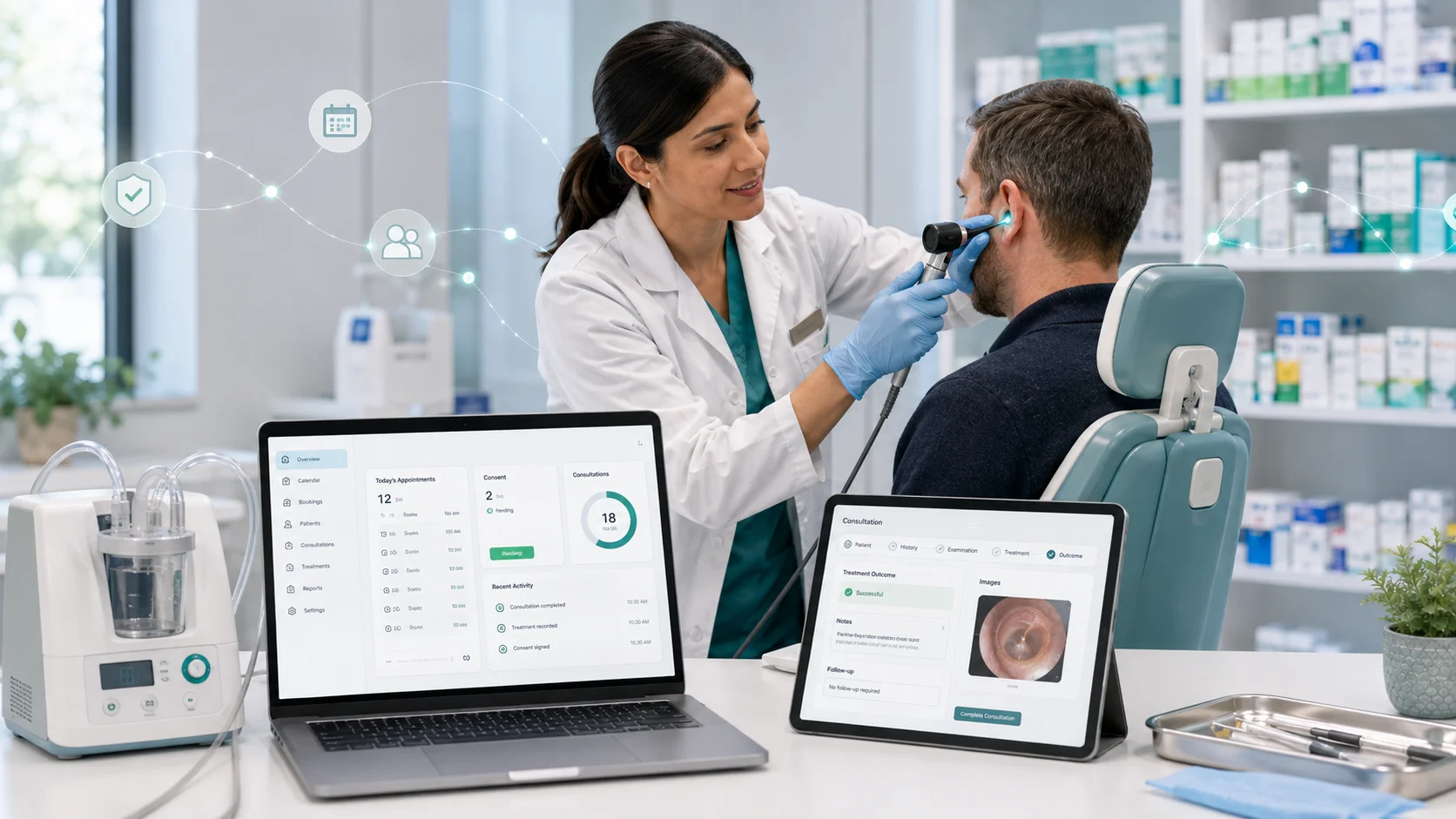
TL;DR: Set up pharmacy ear wax removal services. Learn about training, equipment, clinical considerations, and business setup.
Blocked ears affecting hearing. Discomfort and irritation. GP waiting lists stretching for months. Ear wax removal is a growing private service opportunity for pharmacy.
NHS ear wax removal services have reduced significantly. Patients struggle to access treatment. Pharmacy ear wax removal meets genuine patient need with convenient, professional service.
Service Setup
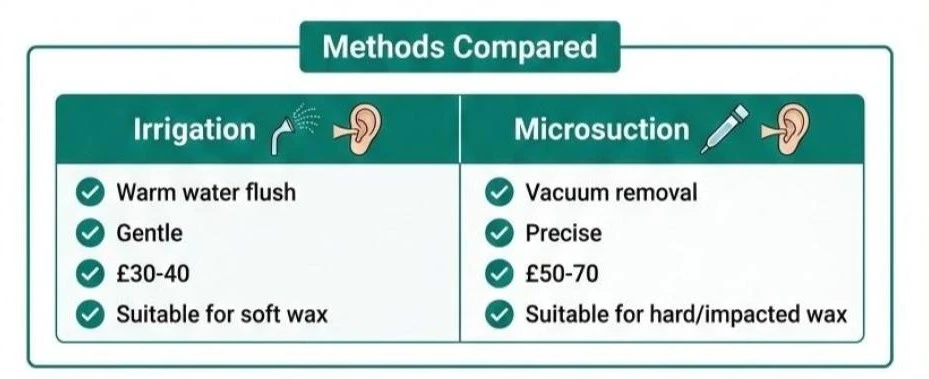
Pharmacies across the UK are increasingly offering ear wax removal services because NHS provision has been drastically reduced. Since 2020, most GP practices and NHS clinics have stopped providing routine ear syringing and microsuction, leaving patients with few options beyond private clinics charging £50–80 per session. Community pharmacies are ideally positioned to fill this gap: they have existing clinical consultation rooms, walk-in accessibility, extended opening hours, and established patient trust. The service requires relatively modest investment in equipment, a microsuction unit costs approximately £500–1,500, and training courses from providers such as the BSA or Aston University can be completed in one to two days. Revenue per appointment typically ranges from £40–60, with many pharmacies seeing ten or more patients per week within the first few months. A digital booking and consultation platform like RxSure streamlines appointment scheduling, patient records, consent forms, and clinical documentation, allowing pharmacies to launch this service efficiently.
Training Requirements
Accredited ear wax removal training essential. Microsuction or irrigation techniques. Otoscopy skills. Contraindication recognition. Competency assessment before practicing.
Equipment Needs
Otoscope for ear examination. Microsuction unit or irrigation equipment. Appropriate lighting. Comfortable patient seating. Infection control supplies.
Facility Requirements
Private consultation room essential. Adequate space for equipment. Good lighting. Patient comfort considerations. Professional clinical environment.
Clinical Considerations
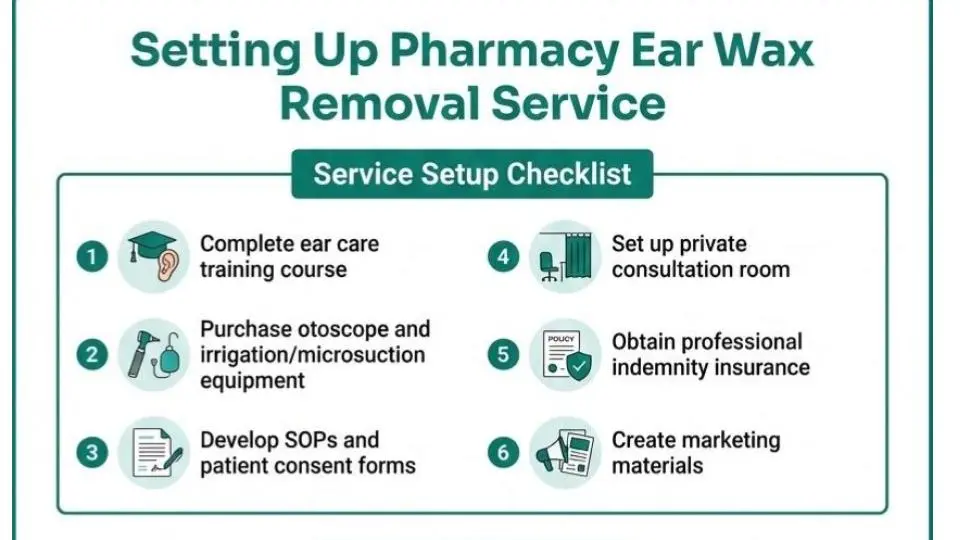
Setting up an ear wax removal service in a community pharmacy involves several practical steps that can be completed within two to four weeks. First, at least one pharmacist or trained healthcare professional must complete accredited microsuction or irrigation training, courses are available from the British Society of Audiology, Aston University, and several private training providers, typically costing £300–600. Second, you need appropriate equipment: an ear microscope or otoscope for assessment, a microsuction unit with disposable specula, and clinical waste facilities. Third, your consultation room must meet infection control standards with appropriate cleaning protocols between patients. Fourth, you should develop standard operating procedures covering patient assessment criteria, contraindications such as perforated tympanic membrane or active infection, and referral pathways for patients requiring ENT specialist review. Professional indemnity insurance must cover the procedure. Finally, configure your booking system to allow patients to schedule appointments online, complete pre-screening questionnaires, and receive aftercare instructions automatically.
Patient Assessment
History of ear problems. Previous procedures. Contraindications to irrigation. Otoscopy before procedure. Appropriate technique selection.
Contraindications
Perforated eardrum for irrigation. Recent ear surgery. Active ear infection. Grommets in situ. Know when to refer rather than treat.
Procedure Safety
Informed consent essential. Explain risks and benefits. Careful technique to avoid trauma. Know when to stop. Post-procedure advice.
Business Considerations
Clinical best practice for pharmacy ear wax removal centres on thorough patient assessment before any intervention. Every consultation should begin with a detailed history covering symptom duration, previous ear problems, hearing aid use, and any history of ear surgery or perforation. Visual examination using an otoscope confirms the presence and nature of wax impaction before proceeding. Microsuction is generally preferred over irrigation for its precision and lower risk of complications, the procedure uses gentle suction under direct visualisation to remove cerumen without water contact with the tympanic membrane. Key contraindications include active ear infection, recent ear surgery within the past six weeks, known perforation, and patients on anticoagulant therapy where extra caution is required. Patients should be advised to use olive oil drops for three to five days before their appointment to soften the wax, improving procedure success rates. Document all findings, interventions, and outcomes in the patient record for audit and governance purposes.
Pricing
Research local market rates. Consider one ear versus both ears pricing. Factor in consultation time and consumables. Competitive but sustainable pricing.
Marketing
Highlight convenience over NHS waits. Professional clinical service. Display service information prominently. Website and social media presence.

Booking System
Online booking preferred by patients. Clear service description. Pre-appointment instructions for oil use. Reminder system to reduce no-shows.
Further Reading
- → Platform Features, Booking, consultation tools, and compliance toolss
- → For Pharmacy Owners, Launch private clinical services from your pharmacy
- → Pricing Plans, Flat monthly fee with no per-consultation charges
- → All Clinical Services, Weight management, travel health, sexual health, and more
Clear Hearing
Ear wax removal meets genuine patient need while diversifying pharmacy income. Professional service delivery builds reputation and patient loyalty.
RxSure supports clinical services with booking, consent documentation, and outcome tracking. Professional ear care services.
Start your free trial and launch ear wax removal services.
About this article: This article was prepared by the RxSure editorial team and is informed by publicly available UK healthcare guidance. Source references include GPhC, NICE, and BNF where cited. Content is reviewed periodically to reflect current information. This article is for general informational purposes and should not be relied upon as professional, medical, or regulatory advice. Last updated: 26 July 2026.