
Pharmacy Blood Pressure Monitoring: Screening and Support
Deliver effective pharmacy blood pressure monitoring. Learn measurement technique, result interpretation, and referral pathways.

Hypertension is the silent killer. Millions walk around with undiagnosed high blood pressure. No symptoms until stroke or heart attack. Pharmacy blood pressure checks save lives.
Community pharmacy blood pressure services are accessible and convenient. No appointment needed at many pharmacies. Regular monitoring for diagnosed patients. Screening for undiagnosed hypertension.
Service Types
Pharmacy blood pressure monitoring services address one of the most significant unmet healthcare needs in the UK. Hypertension affects approximately one in three adults in England, yet Public Health England estimates that around five million people have undiagnosed high blood pressure, making it the single largest risk factor for cardiovascular disease, stroke, and kidney disease. Community pharmacies are uniquely positioned to identify these individuals because they see patients who may not regularly visit their GP, including those collecting repeat prescriptions, purchasing over-the-counter medicines, or accessing other pharmacy services. NICE guideline NG136 recommends ambulatory or home blood pressure monitoring to confirm a diagnosis of hypertension, and pharmacies can offer this as either a commissioned NHS service or a private service typically priced at £15–30 per reading or £40–60 for a 24-hour ambulatory monitoring session. Beyond the direct revenue, blood pressure monitoring serves as an entry point for broader cardiovascular risk assessment, medication reviews, and private health consultations, creating a patient engagement pathway that generates recurring appointments and builds long-term clinical relationships.
Opportunistic Screening
Offer blood pressure checks to patients collecting prescriptions. Particularly those on cardiovascular medications. Identify uncontrolled hypertension. Detect previously undiagnosed cases.
NHS Hypertension Case-Finding
Commissioned service to identify undiagnosed hypertension. Clinic blood pressure measurement. Ambulatory monitoring where indicated. Referral pathway to GP for diagnosis.
Private Monitoring
Regular monitoring for patients wanting convenient checks. Useful for white coat hypertension. Travel health assessments. Occupational health requirements.

Accurate Measurement
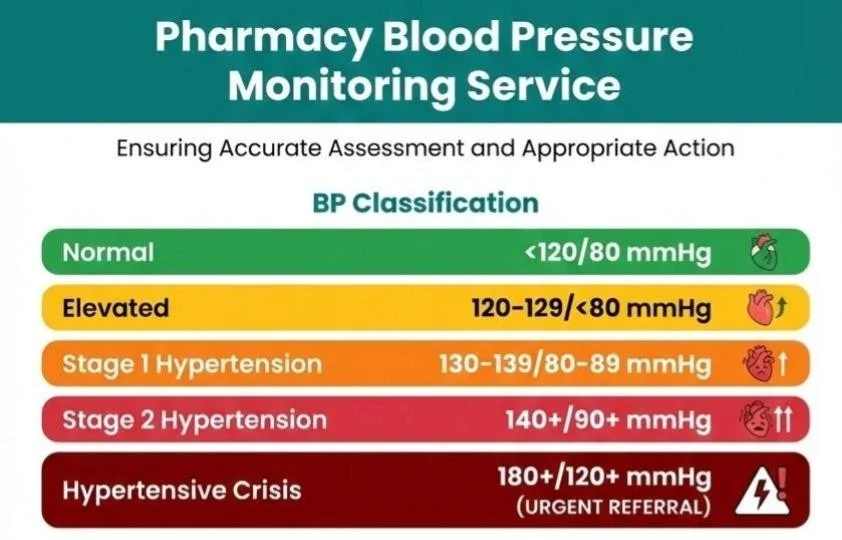
Setting up a pharmacy blood pressure monitoring service requires validated equipment, appropriate staff training, clear clinical protocols, and an efficient booking and record-keeping system. The British and Irish Hypertension Society maintains a list of validated blood pressure monitors, only devices on this list should be used for clinical measurements, as non-validated monitors may produce inaccurate readings that lead to incorrect clinical decisions. Staff conducting measurements must be trained in the correct technique as specified by NICE: the patient should be seated and rested for at least five minutes, the cuff must be the appropriate size for the patient’s arm circumference, and at least two consecutive readings should be taken one minute apart with the lower reading recorded. For 24-hour ambulatory monitoring, pharmacies need additional ABPM devices and must train staff in fitting, patient instruction, and data interpretation. Standard operating procedures should define referral thresholds aligned with NICE NG136: clinic readings of 140/90 mmHg or above require confirmation with ambulatory or home monitoring, and readings of 180/120 mmHg or above require same-day medical assessment.
Equipment
Use validated blood pressure monitors. Regular calibration checks. Appropriate cuff sizes available. Automated devices reduce measurement error.
Technique
Patient seated and relaxed for five minutes. Arm supported at heart level. Correct cuff positioning. No talking during measurement. Multiple readings as per protocol.
Recording
Document readings accurately. Note any factors affecting reading. Record patient position. Include date and time. Maintain records for trend analysis.
Interpreting Results
Clinical protocols for pharmacy blood pressure services must align with NICE guideline NG136 to ensure consistent, evidence-based care and appropriate escalation when needed. The protocol should categorise results into clear action bands: normal readings below 120/80 mmHg requiring no action beyond lifestyle advice, elevated readings between 120/80 and 139/89 mmHg warranting annual monitoring and lifestyle counselling, stage one hypertension at 140/90 to 159/99 mmHg requiring confirmation via ambulatory monitoring and GP referral for treatment consideration, stage two hypertension at 160/100 to 179/119 mmHg requiring prompt GP referral within one to two weeks, and hypertensive urgency at 180/120 mmHg or above requiring same-day medical review. For pharmacist independent prescribers, stage one and two hypertension can potentially be managed directly including initiation of antihypertensive therapy within the prescriber’s competence, with appropriate shared care arrangements with the patient’s GP. Digital platforms like RxSure enable pharmacies to record readings in structured patient records, generate referral letters automatically, schedule follow-up monitoring appointments, and produce audit reports demonstrating clinical governance compliance.
Normal and Elevated
Know the thresholds. Normal below 140/90 in clinic. Elevated readings require action. Significantly elevated needs urgent referral.
Referral Pathways
Know when and how to refer. Suspected hypertension to GP. Hypertensive urgency to same-day medical assessment. Clear protocols for different scenarios.
Lifestyle Advice
Every check is education opportunity. Salt reduction. Weight management. Physical activity. Alcohol moderation. Stress management.

Further Reading
- → Platform Features, Patient records, clinical templates, and reporting
- → For Pharmacy Owners, Launch private monitoring services
- → Health Tools, Blood pressure checker and other patient tools
- → Pricing Plans, Flat monthly fee with unlimited consultations
Detect and Protect
Pharmacy blood pressure services detect hidden disease and support management. Accessible screening saves lives through early intervention.
RxSure supports blood pressure services with measurement recording, trend tracking, and referral documentation. Professional cardiovascular screening.
Start your free trial and enhance your blood pressure service.