


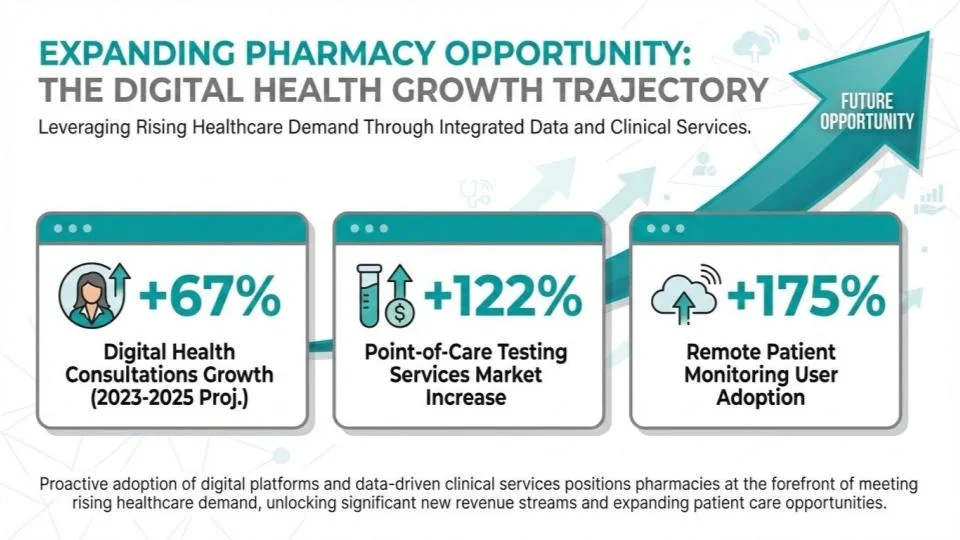
Weight management is the fastest-growing private service in UK pharmacy. The availability of GLP-1 agonists like semaglutide and tirzepatide, combined with expanded pharmacist prescribing rights, has created unprecedented demand. This guide covers everything you need to set up and run a weight management clinic in your pharmacy — from clinical protocols and patient pathways to software, pricing, and compliance.
Why Weight Management Is the Biggest Opportunity
Several factors are driving demand for pharmacy-based weight management services:
- Patient demand: GLP-1 medications like Wegovy and Mounjaro have generated enormous public interest
- GP bottleneck: NHS weight management pathways have long waiting lists — patients are willing to pay for private access
- Pharmacist prescribing: IP pharmacists can prescribe weight management medications independently
- Recurring revenue: Weight management requires ongoing consultations, creating predictable monthly income
- Patient accessibility: Pharmacies are more accessible than GP surgeries for many patients
Setting Up Your Weight Management Clinic
Clinical Requirements
- Prescriber qualification: Independent prescriber (IP) annotation on GPhC registration
- Clinical competence: Documented competence in obesity management and relevant pharmacology
- Equipment: Calibrated scales, height measure, blood pressure monitor, tape measure for waist circumference
- Consultation room: Private room with appropriate clinical equipment
- CPD: Ongoing training in weight management pharmacology and clinical updates
Patient Pathway
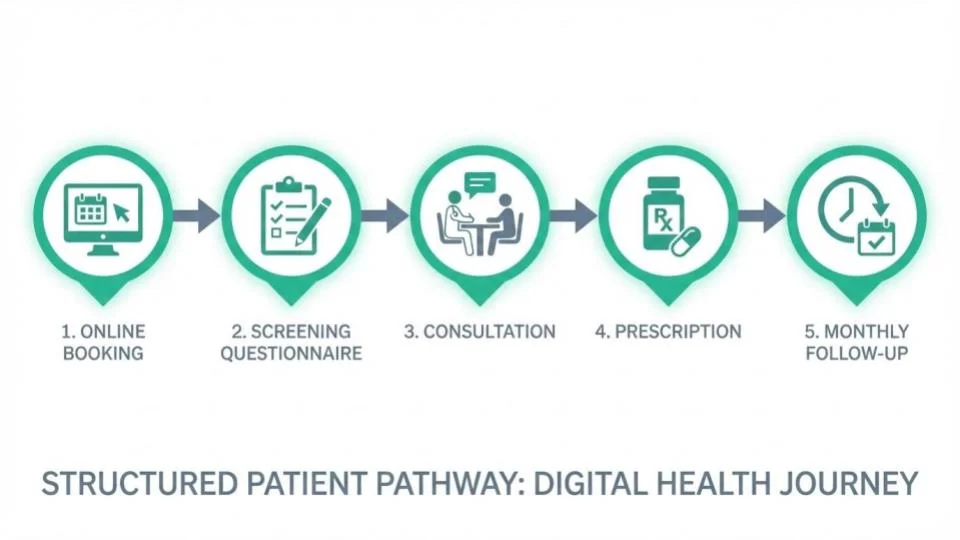
A typical pharmacy weight management patient pathway follows these steps:
- Online booking & pre-screening: Patient books a consultation online and completes a pre-screening questionnaire capturing weight history, medical conditions, current medications, allergies, and weight loss goals
- Initial consultation (30 min): Full clinical assessment including BMI calculation, waist circumference, blood pressure, medical history review, contraindication screening, and discussion of treatment options
- Treatment plan: If appropriate, prescribe medication (e.g., semaglutide, orlistat) with lifestyle guidance. Document clinical rationale, dosage titration plan, and expected review schedule
- Follow-up consultations (15-20 min): Monthly reviews monitoring weight loss progress, side effects, adherence, blood pressure, and dose adjustments
- GP notification: Inform the patient’s GP of the consultation and prescription
Medications You Can Prescribe
As an independent prescriber pharmacist, you can prescribe:
- Semaglutide (Wegovy): GLP-1 receptor agonist, subcutaneous injection, weekly dosing with titration schedule
- Liraglutide (Saxenda): GLP-1 receptor agonist, daily subcutaneous injection
- Orlistat (Xenical/Alli): Lipase inhibitor, oral, three times daily with meals
- Tirzepatide (Mounjaro): Dual GIP/GLP-1 receptor agonist (subject to private prescription availability)
Always prescribe within your competence and follow current clinical guidelines. SmPC-guided consultation templates embed dosage, contraindications, and safety checks directly into your workflow.
Pricing Your Service
Typical pricing for pharmacy weight management services:
- Initial consultation: £30-50 (assessment, treatment plan, first prescription)
- Follow-up consultation: £20-30 (monthly review, dose adjustment)
- Medication cost: Variable — patients pay separately for medication at wholesale + dispensing margin
- Package pricing: Some pharmacies offer 3-month or 6-month packages at a discount
At 30 patients on monthly follow-up, a weight management clinic can generate £1,500-3,000/month in consultation fees alone — plus medication revenue.
Software Requirements
Running an efficient weight management clinic requires digital tools for:
- Online booking: Patients self-book initial and follow-up appointments, with automated reminders to reduce no-shows
- Pre-screening: Digital questionnaires capture medical history, current medications, and contraindications before the appointment
- Consultation templates: Structured weight management templates with BMI calculators, dosage titration guides, and safety checks
- Prescription generation: Electronic private prescriptions with full audit trail
- Payment processing: Collect consultation fees at the point of service
- Patient tracking: Monitor weight loss progress, medication adherence, and appointment history across visits
RxSure provides all of these in one integrated platform — eliminating the need for separate booking, consultation, prescribing, and payment tools.
Compliance Considerations
Weight management services must meet GPhC standards for private prescribing:
- Document clinical rationale for every prescribing decision
- Perform and record contraindication checks (cardiovascular risk, thyroid disease, eating disorders, pregnancy)
- Follow dose titration schedules as per SmPC guidance
- Monitor and document side effects at every follow-up
- Maintain complete audit trails for all consultations and prescriptions
- Send GP notification letters for every patient
- Conduct regular audits of your weight management service outcomes
Marketing Your Weight Management Clinic
- Website: Dedicated weight management service page with online booking
- Social media: Educational content about weight management options (avoid specific medication promotion under MHRA rules)
- In-pharmacy: Posters, leaflets, and counter cards in weight management product areas
- Google Business: Add “weight management” to your pharmacy’s Google Business Profile services
- Word of mouth: Satisfied patients are the best marketing — deliver excellent service and results follow
Key Takeaways
- Weight management is the highest-demand private pharmacy service in 2026
- IP pharmacists can prescribe GLP-1 medications independently
- A structured patient pathway (booking, screening, consultation, follow-up) is essential
- Monthly follow-ups create predictable recurring revenue
- Digital workflows make consultations faster, safer, and inspection-ready
- At 30 patients on monthly follow-up, expect £1,500-3,000/month in consultation fees