

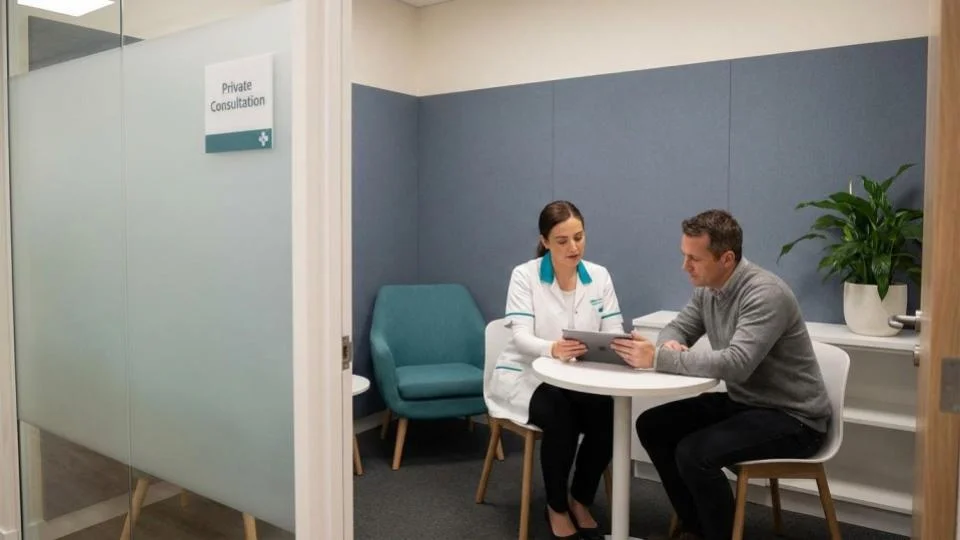
Private prescribing represents one of the biggest revenue opportunities for UK pharmacists. With expanded independent prescribing rights, pharmacist prescribers can now offer a wide range of private services — from weight management and travel health to sexual health and dermatology. This guide covers the services you can offer, how to set up, and how to make private prescribing a profitable part of your practice.
Who Can Privately Prescribe as a Pharmacist?
To prescribe privately as a pharmacist in the UK, you must be:
- GPhC registered with an Independent Prescriber (IP) annotation on your registration
- Qualified — completed an accredited independent prescribing course
- Competent — prescribing within your area of clinical competence
- Insured — professional indemnity insurance covering private prescribing
Since the expansion of pharmacist prescribing rights, independent prescriber pharmacists can prescribe any medication within their competence — including controlled drugs (with some exceptions). This puts pharmacist prescribers on par with doctors for private prescribing capabilities.
Private Services You Can Offer
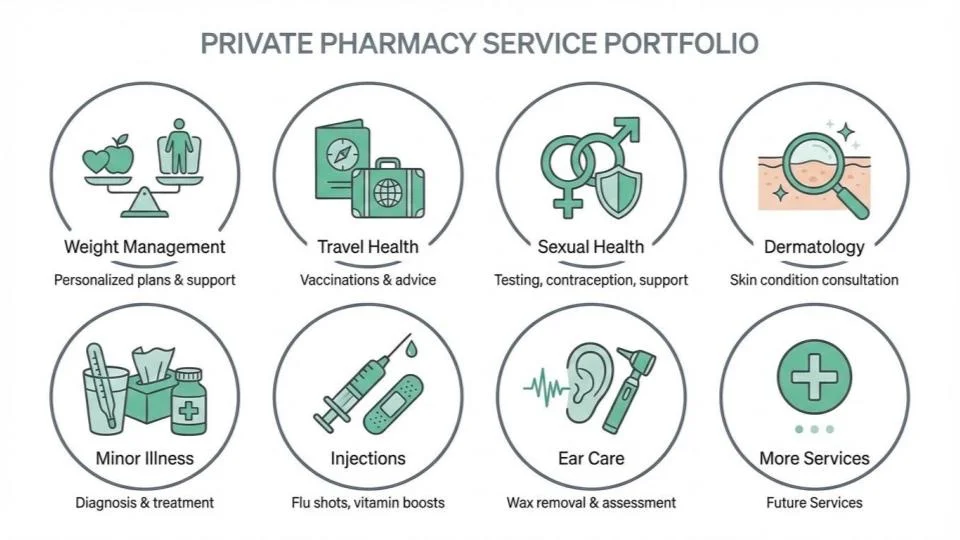
Here are the most popular and profitable private prescribing services for pharmacists, with typical pricing and demand indicators:
1. Weight Management
Demand: Very High — driven by GLP-1 agonist availability
Weight management is currently the highest-demand private pharmacy service. Services include initial consultations, prescription of weight management medications, ongoing monitoring, and dietary guidance. Pharmacists with IP qualifications can prescribe medications like semaglutide, liraglutide, and orlistat.
2. Travel Health
Demand: High — seasonal peaks around holiday periods
Travel health consultations cover destination-specific risk assessments, vaccination recommendations, antimalarial prescriptions, and travel health kits. This is an established private pharmacy service with strong seasonal demand.
3. Sexual Health
Demand: High — discretion valued by patients
Sexual health services include erectile dysfunction consultations and prescriptions, contraception consultations, STI testing and treatment, and PrEP/PEP consultations. Pharmacy offers privacy and accessibility that many patients prefer over GP visits.
4. Dermatology & Skin Conditions
Demand: Medium-High
Dermatology services include acne treatment plans, eczema and psoriasis management, prescription skincare, and hair loss treatments (finasteride, minoxidil). These services often involve repeat prescriptions, creating ongoing patient relationships.
5. Ear Wax Removal
Demand: High — NHS access limited
Microsuction ear wax removal is a high-demand, quick-turnover service. While not strictly prescribing, it complements a private services portfolio and requires minimal setup beyond equipment and training.
6. Vitamin & Supplement Injections
Demand: Medium
Vitamin B12 injections, vitamin D loading doses, and wellness injections. These services attract health-conscious patients and can be offered alongside other private consultations.
7. Minor Illness & Ailments
Demand: Medium — especially where GP access is limited
Consultations for conditions like UTIs, sore throats, sinusitis, and conjunctivitis where patients want faster access than GP appointments offer. Pharmacist prescribers can assess, diagnose, and prescribe in a single visit.
Setting Up Private Prescribing in Your Pharmacy
Getting started with private prescribing requires four key elements:
1. Clinical Competence
Complete your IP qualification if you haven’t already. Then build competence in your chosen service areas through CPD, mentoring, and supervised practice. Document everything — GPhC inspectors will want to see evidence of competence for each service you offer.
2. Standard Operating Procedures
Write SOPs for every private service. These should cover: patient eligibility criteria, pre-screening requirements, consultation workflow, prescribing protocols, safety checks, referral criteria, and follow-up procedures.
3. Software & Systems
You need systems for patient booking, consultation documentation, electronic prescription generation, payment processing, and compliance management. Using private prescription software that covers the entire workflow eliminates the need for multiple separate tools.
4. Promotion
Patients won’t use services they don’t know about. Promote through your pharmacy website, social media, in-pharmacy signage, and local community engagement. Online booking makes it easy for patients to discover and book your services.
Revenue Potential
Private prescribing revenue varies by service and volume, but typical ranges for a single-site pharmacy include:
- Weight management: £500-3,000/month (depending on volume)
- Travel health: £300-1,500/month (seasonal)
- Sexual health: £200-1,000/month
- Ear wax removal: £400-1,200/month
- Combined portfolio: £2,000-8,000+/month additional revenue
The key to maximising revenue is offering a portfolio of services (not just one), using online booking to fill appointment slots, and running efficient consultations with digital workflows.

Compliance Essentials
Private prescribing comes with compliance responsibilities. Ensure you have:
- Complete audit trails for every consultation and prescription
- Structured consultation records (not just “consulted — prescribed”)
- Documented contraindication checks and safety assessments
- Patient consent records
- GP notification for all private prescriptions issued
- Regular audits of your private prescribing activity
Read our detailed GPhC compliance guide for the full checklist.
Key Takeaways
- Pharmacist independent prescribers can offer a wide range of profitable private services
- Weight management, travel health, and sexual health are the highest-demand services
- A portfolio approach (multiple services) maximises revenue potential
- Digital workflows make consultations faster, safer, and compliant
- Online booking and promotion are essential for filling appointment slots
- Compliance must be built into daily practice, not treated as an afterthought