

Travel Clinic Software for Pharmacies: What You Need
Travel clinic services represent one of the most profitable seasonal opportunities for UK community pharmacies. With millions of UK residents travelling abroad each year, the…
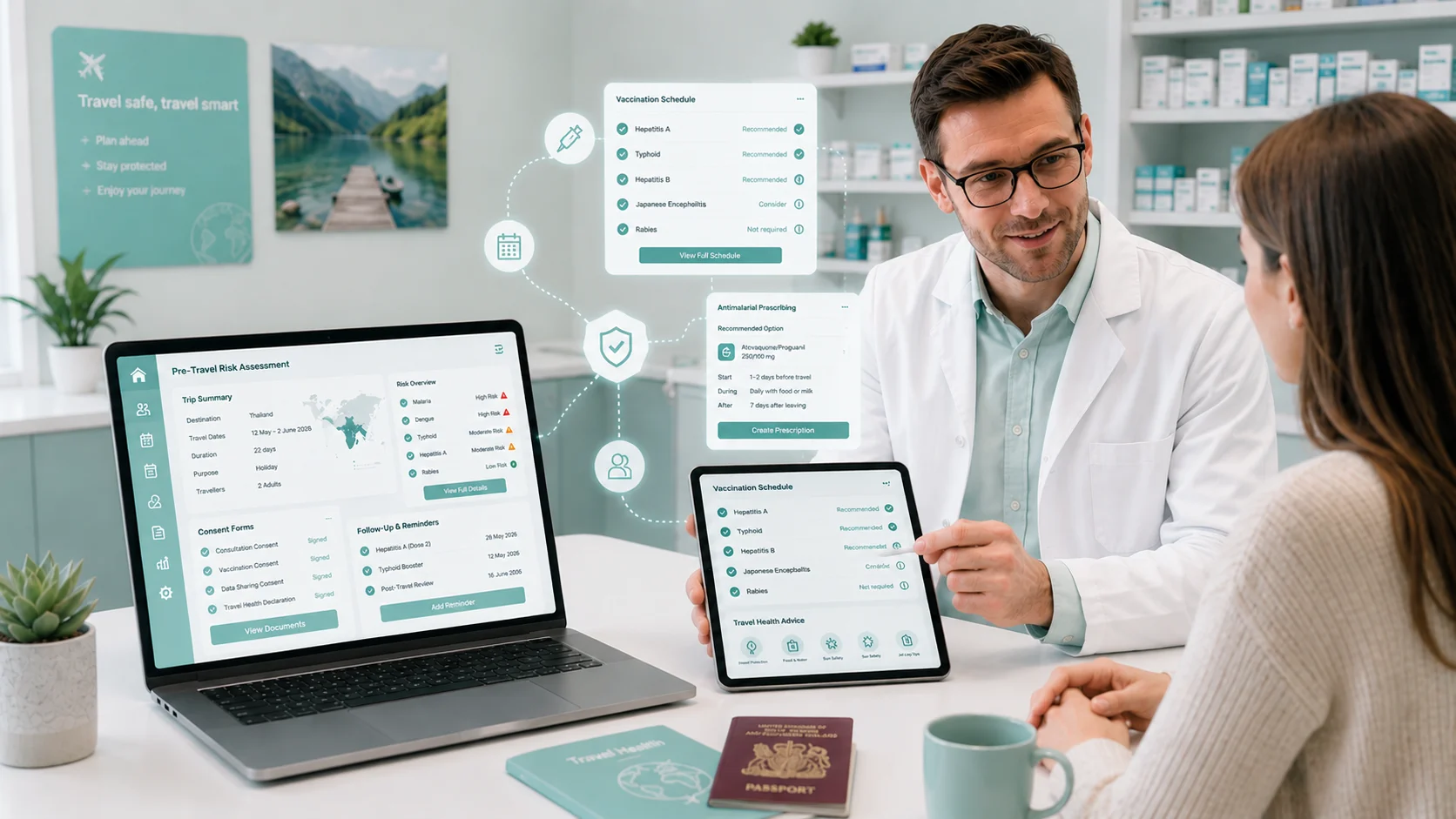
Travel clinic services represent one of the most profitable seasonal opportunities for UK community pharmacies. With millions of UK residents travelling abroad each year, the demand for pre-travel consultations, vaccinations, and antimalarial prescriptions creates a reliable revenue stream, especially when supported by the right pharmacy consultation software.
This guide covers everything you need to set up and run a successful pharmacy travel clinic, from clinical requirements to the software features that make it scalable.
Why Travel Health Is a Growth Opportunity
Travel health services offer UK pharmacies a consistent revenue stream because demand is driven by international travel patterns rather than seasonal healthcare needs alone. Pharmacist independent prescribers can provide comprehensive travel health consultations covering destination-specific risk assessments, vaccination administration for diseases including Hepatitis A, Hepatitis B, Typhoid, Meningitis ACWY, Rabies, and Yellow Fever, antimalarial prescribing based on country-specific resistance patterns, and general travel health advice covering food and water hygiene, insect bite prevention, and altitude sickness. Each consultation typically generates between forty and eighty pounds in revenue depending on the vaccines and medications required, with many travellers needing multiple doses across several appointments. A digital platform with travel health consultation templates streamlines the process by presenting destination-specific vaccination requirements, screening for contraindications based on the patient’s medical history, tracking multi-dose vaccination schedules with automated follow-up reminders, and generating International Certificates of Vaccination where required. The audit trail satisfies GPhC requirements for documenting clinical decisions.
Travel health services are particularly attractive for pharmacies because of several key factors:
- Seasonal peaks with predictable demand, January to March (summer holiday bookings) and September to November (winter sun) create natural marketing windows
- Higher-than-average consultation fees, travel consultations typically command £30–£80 per appointment, plus vaccination and medication charges
- Multiple revenue touchpoints, a single travel consultation may involve consultation fees, vaccinations, antimalarial prescriptions, and travel health products
- Patient loyalty, satisfied travel health patients return annually and recommend your pharmacy to others
- Differentiation, not all pharmacies offer travel health, so it positions your pharmacy as a specialist provider
Clinical Requirements for Pharmacy Travel Clinics
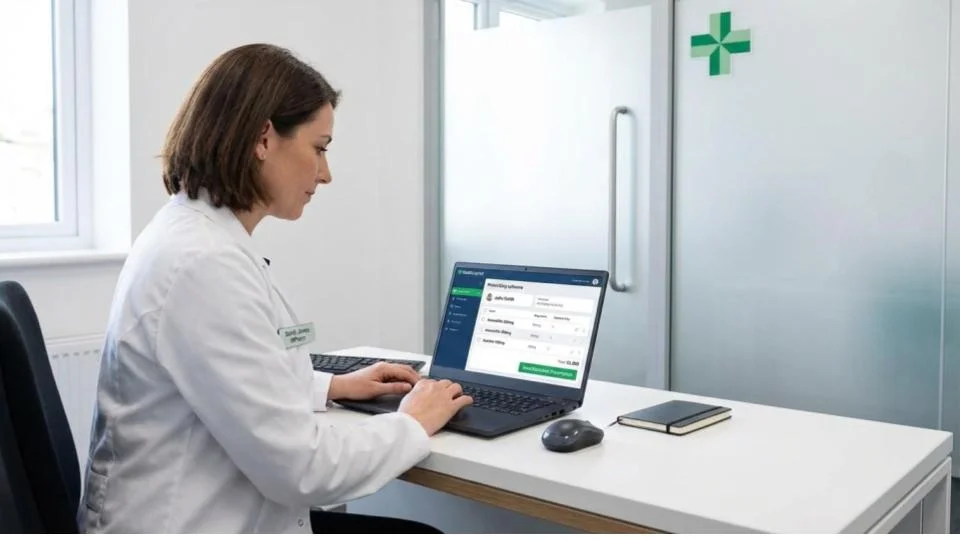
Setting up a pharmacy travel health service requires specific training, equipment, and clinical governance structures to ensure safe and compliant service delivery. Pharmacists should complete an accredited travel health training course covering tropical medicine, vaccine administration, and antimalarial prescribing, with providers such as the Royal College of Physicians Faculty of Travel Medicine and the National Travel Health Network and Centre offering recognised qualifications. Essential equipment includes appropriate vaccine storage facilities with continuous temperature monitoring, anaphylaxis management equipment including adrenaline auto-injectors, and a private consultation room meeting infection control standards. Clinical governance requirements include standard operating procedures for each vaccine type, patient group directions or independent prescriber protocols, contraindication screening checklists, and referral pathways to specialist travel clinics for complex itineraries. Digital booking and consultation platforms enable patients to complete pre-screening questionnaires before their appointment, allowing the pharmacist to prepare destination-specific vaccination recommendations in advance and reducing consultation time while improving clinical thoroughness and documentation quality.
Staff Qualifications
To offer travel health consultations and prescriptions, your team needs:
- Pharmacist Independent Prescriber (IP), for prescribing antimalarials and travel medications, or use appropriate PGDs
- Travel health training, specific courses covering destination risk assessment, vaccine schedules, and antimalarial recommendations
- Vaccination competency, for administering travel vaccines (Hepatitis A/B, Typhoid, etc.)
- Annual CPD, maintaining up-to-date knowledge of country-specific health risks
Facility Requirements
- Private consultation room with hand-washing facilities
- Appropriate vaccine storage (cold chain compliance)
- Emergency equipment (adrenaline, resuscitation kit)
- Patient observation area (post-vaccination monitoring)
The Travel Consultation Workflow
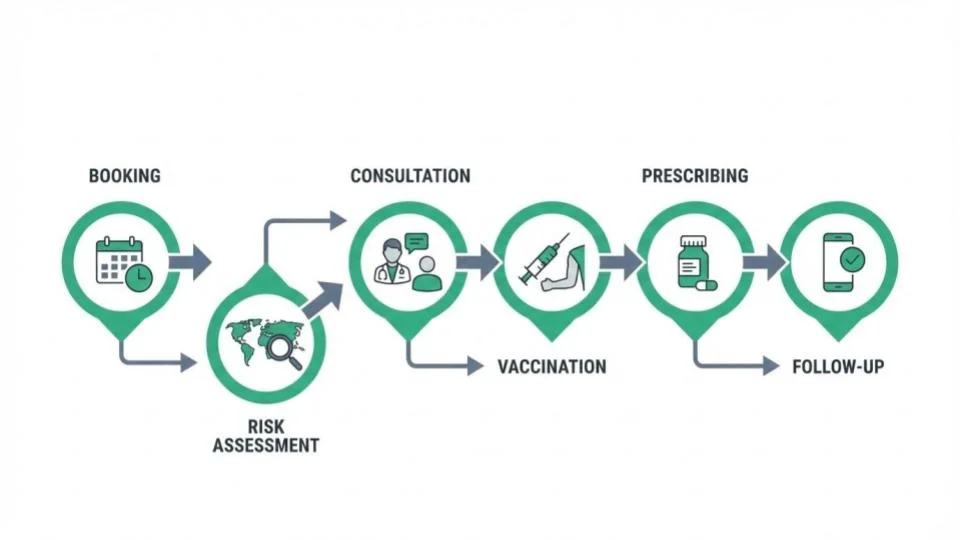
A well-structured travel health consultation follows a consistent workflow:
Step 1: Pre-Consultation Booking
Patients book online, selecting their travel destination and dates. The booking system captures essential pre-consultation information: destinations, travel dates, medical history, current medications, and previous vaccinations.
Step 2: Risk Assessment
Using destination-specific clinical protocols, the pharmacist assesses health risks: endemic diseases, required vaccinations, antimalarial prophylaxis needs, food and water safety, and altitude or climate considerations.
Step 3: Clinical Consultation
A structured consultation covering:
- Destination-specific health risks and precautions
- Vaccination recommendations and schedule
- Antimalarial prescribing (where indicated)
- General travel health advice (sun safety, insect bite prevention, traveller’s diarrhoea)
- Travel health kit recommendations
Step 4: Vaccination Administration
Administer recommended vaccinations, record batch numbers, document consent, and schedule follow-up doses where required.
Step 5: Prescribing and Documentation
Generate electronic prescriptions for antimalarials and other travel medications. Complete clinical documentation including risk assessment, clinical rationale, and patient consent.
Step 6: Payment and Follow-Up
Collect consultation and vaccination fees. Schedule follow-up appointments for multi-dose vaccines. Provide written travel health advice.
Software Features for Travel Clinics
The right software transforms travel health services from complex and time-consuming to simpler and scalable. Essential features include:
Online Booking with Pre-Screening
Patients should be able to book travel consultations online, providing destination, travel dates, and basic medical history before the appointment. This saves 10–15 minutes per consultation and ensures the pharmacist has the information needed to prepare.
Destination-Specific Templates
Consultation templates that automatically populate health risks, vaccination recommendations, and antimalarial options based on the travel destination. This ensures consistency and reduces the risk of missing critical advice.
Electronic Prescribing
E-prescribing with built-in drug interaction checks ensures safe antimalarial prescribing, especially for patients on existing medications. Prescription generation takes seconds rather than minutes.
Vaccination Record Management
Tracking vaccine batch numbers, administration dates, consent records, and follow-up schedules. Essential for compliance and for patients who need documentation for visa applications.
Integrated Payments
Collect consultation fees, vaccination charges, and medication costs in a single transaction. Automated receipts for patients claiming on travel insurance.
Compliance and Audit Trail
Complete documentation of every consultation, prescribing decision, and vaccination, ready for GPhC inspection at any time.
Pricing Your Travel Health Services
| Service | Typical Fee Range |
|---|---|
| Travel health consultation (30 min) | £30–£50 |
| Hepatitis A vaccination | £50–£80 |
| Hepatitis B course (3 doses) | £120–£180 |
| Typhoid vaccination | £30–£50 |
| Antimalarial prescription | £20–£60 (plus medication) |
| Yellow Fever vaccination | £60–£85 |
A single family of four travelling to East Africa could generate £400–£800+ in consultation, vaccination, and prescribing fees.
Marketing Your Travel Clinic
- Google Business Profile, add “Travel Health Clinic” as a service
- Seasonal campaigns, promote in January (summer holidays) and September (winter sun)
- In-pharmacy signage, posters near the dispensary and waiting area
- Social media, destination-specific health tips drive engagement
- NHS referrals, GPs often refer patients to pharmacies for travel vaccinations
- Local businesses, partner with travel agents to cross-refer
References
- National Travel Health Network and Centre. TravelHealthPro, Country Information. NaTHNaC/UKHSA, 2024.
- British National Formulary. BNF Online, Vaccines and Antimalarials. NICE, 2024.
- General Pharmaceutical Council. Standards for Pharmacy Professionals. GPhC, 2024.
Key Takeaways
- Travel health services generate £30–£80+ per consultation with multiple revenue touchpoints
- Seasonal demand creates predictable revenue peaks you can plan around
- Structured software with destination templates and e-prescribing makes consultations efficient and compliant
- Online booking captures patients 24/7 and collects pre-consultation information
- Complete documentation and audit trails satisfy GPhC requirements
- RxSure provides the integrated platform for booking, consultations, prescribing, and payments
Ready to launch travel health services in your pharmacy? Start your free 3-month RxSure trial, set up your travel clinic in minutes.