

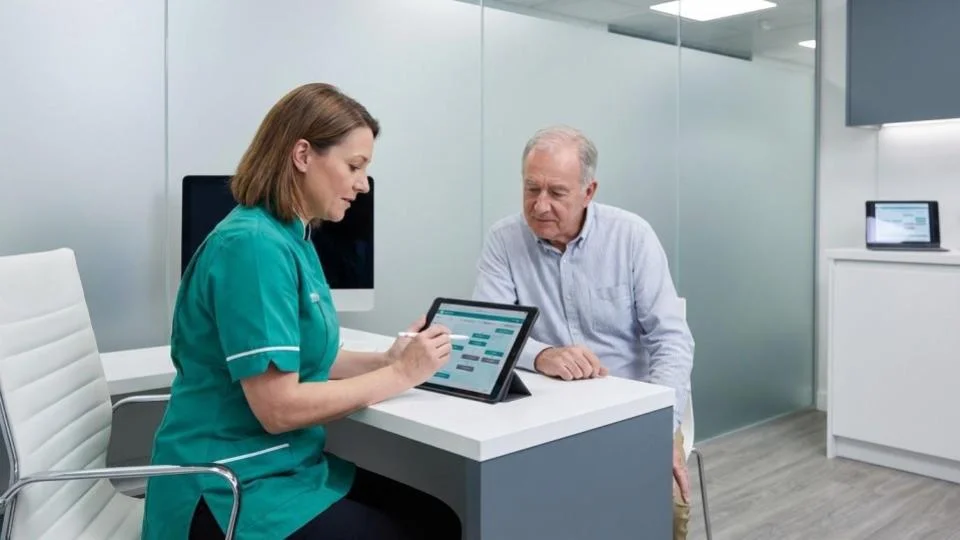
The NHS Pharmacy First programme has transformed community pharmacy in England, enabling pharmacists to consult, treat, and manage patients for common conditions without a GP referral. But delivering Pharmacy First efficiently requires the right digital infrastructure — consultation software that supports structured clinical pathways, documentation, and NHS reporting.
This guide explains how pharmacy software supports Pharmacy First delivery, what features to look for, and how to combine NHS services with private prescribing for maximum impact.
What Is the Pharmacy First Programme?
Pharmacy First is an NHS England service launched in January 2024 that allows community pharmacists to assess and treat patients for seven common conditions:
- Sinusitis — acute, uncomplicated cases
- Sore throat — acute pharyngitis
- Earache — acute otitis media in specific age groups
- Infected insect bites — localised bacterial infection
- Impetigo — localised, non-bullous cases
- Shingles — in specific patient groups
- Uncomplicated UTIs — in women aged 16–64
Pharmacists can supply prescription-only medications for these conditions under Clinical Pathways, funded by the NHS at a fixed consultation fee.
Why Software Matters for Pharmacy First
Pharmacy First consultations require structured clinical assessment, proper documentation, and NHS reporting. Without appropriate software, the administrative burden can make the service unviable. Here is why technology is essential:
Structured Clinical Pathways
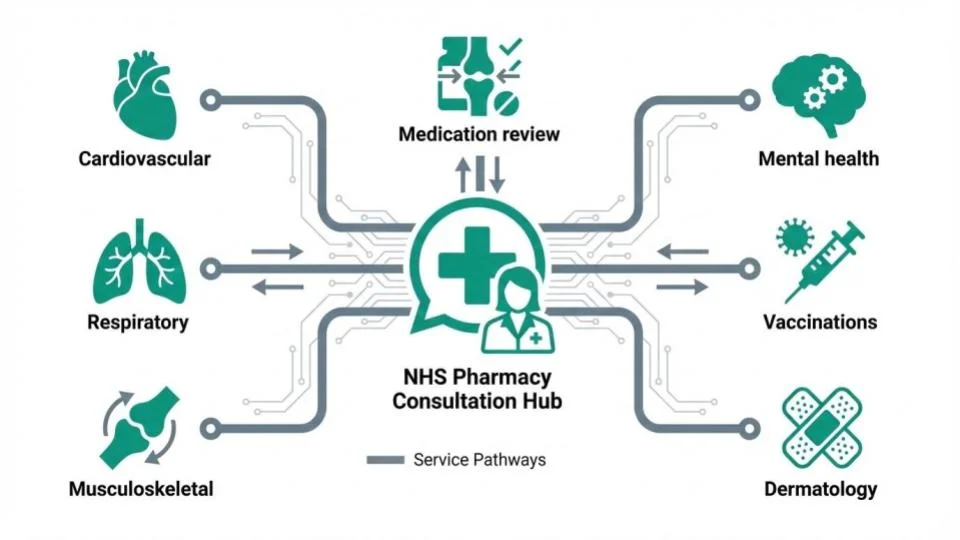
Each of the seven conditions has specific inclusion and exclusion criteria, red flag symptoms, and treatment protocols. Software with built-in clinical pathways ensures every pharmacist follows the correct assessment process, reducing clinical risk and supporting consistent care.
Documentation Requirements
Every Pharmacy First consultation must be documented with:
- Patient demographics and NHS number
- Presenting symptoms and duration
- Clinical assessment findings
- Exclusion criteria checks
- Treatment decision and rationale
- Medication supplied (if any)
- Safety-netting advice given
- GP notification (where required)
NHS Reporting and Claims
Pharmacies must submit consultation data to the NHS for payment. Software that integrates with NHS systems or generates structured reports simplifies the claims process and reduces payment delays.
Essential Software Features for Pharmacy First
1. Condition-Specific Consultation Templates
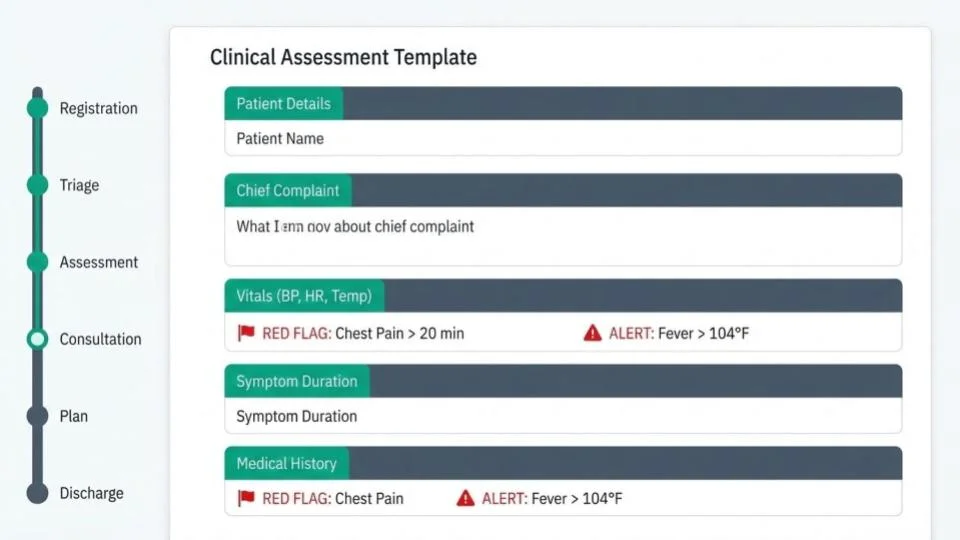
Pre-built templates for each of the seven conditions that guide the pharmacist through the correct clinical pathway. Templates should include mandatory fields for red flag checks, ensuring nothing is missed.
2. Patient Record Management
Secure patient records that store consultation history, medication supplied, and outcomes. When a patient returns with the same or different condition, their history is immediately accessible.
3. Clinical Decision Support
Alerts for exclusion criteria, drug interactions, and contraindications. When a patient does not meet the Pharmacy First criteria, the system should guide the pharmacist to refer appropriately.
4. GP Notification
Automated or one-click GP notification for consultations where the patient’s GP practice needs to be informed. This maintains continuity of care and meets NHS requirements.
5. Reporting and Analytics
Dashboard showing consultation volumes, condition breakdown, treatment outcomes, and revenue. This data helps you understand demand patterns and optimise staffing.
6. Integration with Private Services
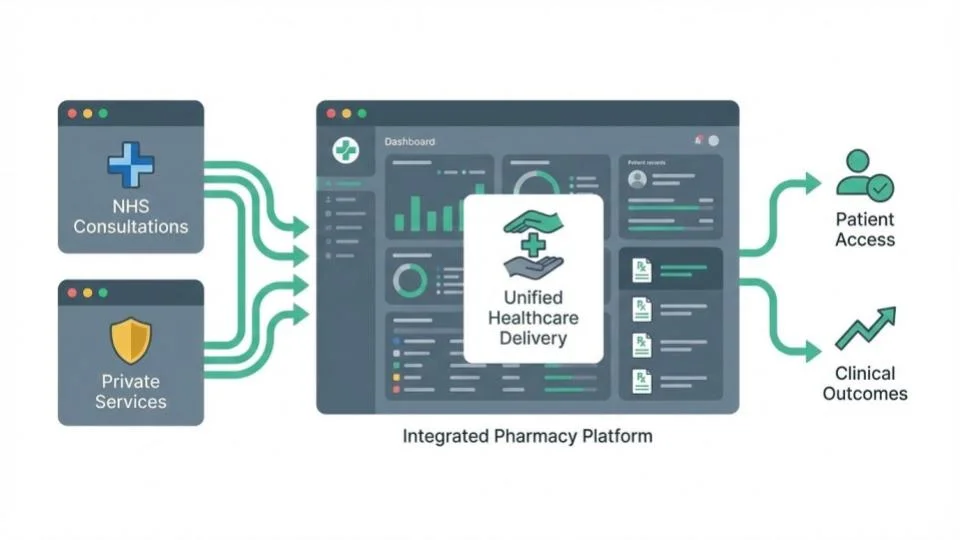
The real power comes from combining Pharmacy First with private prescribing services. A patient who visits for a Pharmacy First UTI consultation discovers you also offer weight management or travel health services. Software that handles both NHS and private pathways in one platform maximises this cross-selling opportunity.
Combining NHS and Private Services
The most commercially successful pharmacies use Pharmacy First as a gateway to their broader service offering. Here is how:
Patient Awareness
Every Pharmacy First patient is a potential private services patient. During the consultation, the booking system can display your full service menu. A patient treated for an insect bite before a holiday might also need travel vaccinations.
Shared Infrastructure
The same consultation room, booking system, and patient records serve both NHS and private patients. This makes the marginal cost of adding private services very low.
Cross-Service Referral
Structured consultation templates can include prompts for related services. A Pharmacy First consultation for a UTI might include a prompt about sexual health screening services you offer privately.
Data-Driven Expansion
Pharmacy First consultation data reveals local demand patterns. If you are seeing high volumes of sore throat consultations, there may be demand for private winter wellness services.
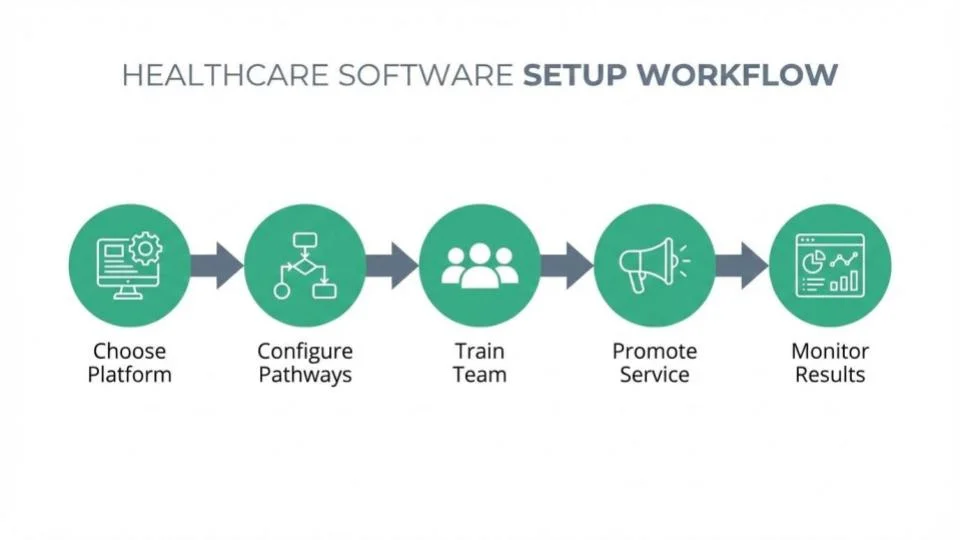
Setting Up Pharmacy First with Software
Step 1: Choose the Right Platform
Look for e-prescribing software that supports both NHS clinical pathways and private prescribing. This avoids maintaining two separate systems and ensures a unified patient record.
Step 2: Configure Clinical Pathways
Set up consultation templates for each of the seven conditions. Include mandatory red flag checks, treatment protocols, and safety-netting guidance.
Step 3: Train Your Team
Ensure all pharmacists are comfortable with the software and clinical pathways. Most platforms offer training sessions and documentation. RxSure includes onboarding support for all new users.
Step 4: Promote the Service
Update your Google Business Profile, add signage in-pharmacy, and inform local GP practices that you accept Pharmacy First referrals.
Step 5: Monitor and Optimise
Review consultation data weekly. Identify peak times, common conditions, and opportunities to improve efficiency or add related private services.
Compliance Considerations
Pharmacy First services are subject to GPhC standards and NHS contractual requirements. Key compliance areas:
- Clinical governance — documented protocols for each condition
- Staff competency — evidence of training and ongoing CPD
- Record keeping — complete, timestamped consultation records
- Safeguarding — procedures for vulnerable patients
- Audit — regular review of consultation outcomes and prescribing patterns
- Data protection — GDPR-compliant patient data handling
Key Takeaways
- Pharmacy First creates a funded NHS service opportunity that drives patient footfall
- Software with structured clinical pathways ensures consistent, compliant consultations
- The real value comes from combining NHS and private services on one platform
- Every Pharmacy First patient is a potential private services patient
- Documentation and reporting are non-negotiable — choose software that automates these
- RxSure handles both NHS pathways and private prescribing in one integrated platform
Ready to deliver Pharmacy First and private services from one platform? Start your free 3-month RxSure trial — no setup fees, full support.