


If your pharmacy offers private prescribing services, GPhC compliance is not optional — it’s the foundation of your practice. The General Pharmaceutical Council sets clear standards for how pharmacies must manage private prescriptions, clinical governance, record-keeping, and patient safety. This guide explains what GPhC requires for private prescribing, how compliance software helps, and what inspectors actually look for when they visit.
What Does the GPhC Require for Private Prescribing?
The GPhC’s Standards for Registered Pharmacies establish the framework that applies to all pharmacy services, including private prescribing. The key standards relevant to private prescribing are:
Standard 1: Governance
Pharmacies must have a clear governance framework for private services. This includes:
- Documented standard operating procedures (SOPs) for every private service offered
- Clear roles and responsibilities for prescribers and support staff
- Regular review and audit of private prescribing activity
- Incident reporting and learning processes
Standard 2: Staff
- All prescribers must be appropriately qualified and registered (IP pharmacists on the GPhC register with an annotation)
- Staff must receive adequate training for the services they provide
- Continuing professional development (CPD) must be documented
- Competence assessments should be conducted regularly
Standard 3: Premises & Equipment
- A private consultation room is required for all consultations
- Equipment must be appropriate for the services offered (e.g., blood pressure monitors, scales)
- IT systems must be secure and GDPR-compliant
Standard 4: Services
- Services must be delivered safely and effectively
- Clinical decisions must be evidence-based
- Patient consent must be obtained and documented
- Prescribers must have access to relevant patient medical history
- GP notification is required — patients’ GPs should be informed of private prescriptions issued
Standard 5: Equipment & Facilities
- Appropriate record-keeping systems must be in place
- Patient records must be accurate, complete, and securely stored
- Records must be retrievable for audit and inspection purposes
What GPhC Inspectors Actually Look For
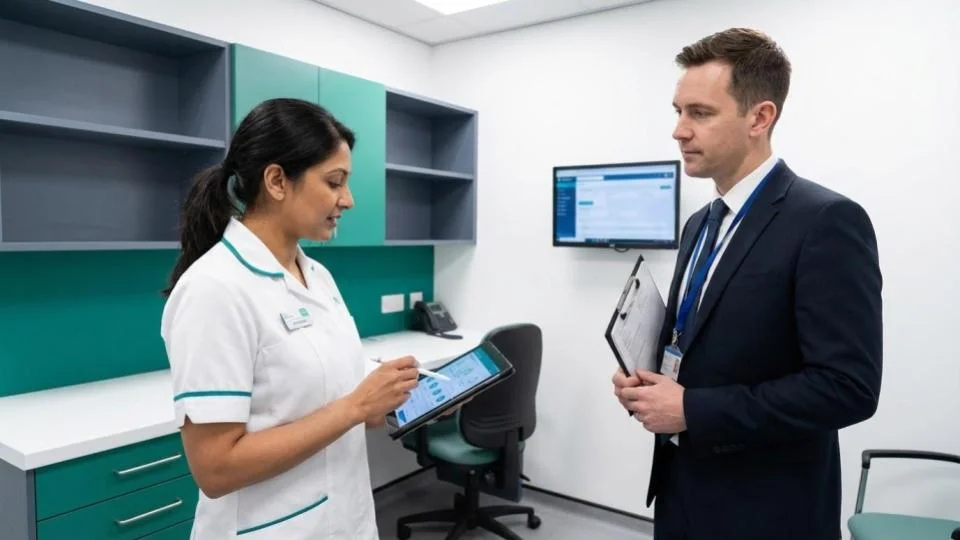
During an inspection, GPhC inspectors will focus on several areas specific to private prescribing:

Prescription Records
Inspectors want to see a complete record for every private prescription issued. This must include:
- Patient details (name, DOB, address)
- Date of consultation and prescription
- Clinical assessment and rationale for prescribing
- Medication details (name, form, strength, quantity, directions)
- Prescriber details and registration number
- Evidence of safety checks performed
With paper records, pulling together this information for multiple patients can take hours. With private prescription software, it’s available instantly — every record is searchable, timestamped, and complete.
Clinical Governance
Inspectors want evidence that clinical decisions are safe and structured. They’ll look for:
- Evidence of pre-screening before consultations
- Structured consultation notes (not just “consulted — prescribed”)
- Reference to clinical guidelines or SmPC information
- Documentation of contraindication checks
- Records of patient consent
Audit Trail
A complete, tamper-proof audit trail demonstrates good governance. Inspectors can trace a patient’s journey from booking through consultation to prescription and dispensing. Electronic systems provide this automatically; paper-based systems require manual collation.
Staff Competence
Inspectors verify that prescribers are appropriately qualified, that training records are up to date, and that competence assessments have been conducted. Software with built-in CPD tracking makes this straightforward.
How Compliance Software Helps
Private prescribing compliance software doesn’t just generate prescriptions — it builds compliance into your daily workflow. Here’s how:
Automatic Audit Trails
Every action — booking, consultation, prescription, payment, amendment — is automatically logged with a timestamp, user identity, and details. This creates an inspection-ready record without any manual effort.
Structured Consultation Templates
SmPC-guided consultation templates ensure every consultation follows a standardised, evidence-based structure. This means the prescriber can’t skip safety checks — they’re embedded in the workflow. Inspectors view this positively as evidence of clinical governance.
GP Notification
Good practice (and often a GPhC expectation) is to notify the patient’s GP when a private prescription is issued. Software can automate GP notification letters, ensuring this step is never forgotten.
Pre-Screening Questionnaires
Patients complete pre-screening questionnaires before their consultation. These are stored in the patient record and demonstrate to inspectors that safety information was collected before the clinical encounter.
Compliance Dashboard
A compliance dashboard shows at a glance: total prescriptions issued, services offered, outstanding items, staff training status, and any flagged concerns. This gives the superintendent pharmacist immediate oversight of private prescribing activity across all sites.
Common Compliance Mistakes to Avoid
From inspection reports and enforcement actions, these are the most common compliance failures in private prescribing:
- Inadequate consultation records: “Consulted — prescribed” is not sufficient. Consultation notes must document the clinical assessment, safety checks, and prescribing rationale.
- No evidence of contraindication checks: If there’s no documentation of safety checks, inspectors assume they weren’t done.
- Missing patient consent: Consent must be documented, not just assumed.
- No GP notification: Failing to notify patients’ GPs is a common finding and reflects poorly on clinical governance.
- Incomplete audit trails: Gaps in records — missing dates, unsigned prescriptions, lost files — signal poor governance.
- Untrained staff: Support staff involved in private services must understand their role, limitations, and the SOPs they follow.
- No regular audit: Pharmacies should audit their private prescribing activity regularly (at least quarterly) and document findings and actions.
A Compliance Checklist for Your Pharmacy
Use this checklist to assess your private prescribing compliance readiness:
- All prescribers are registered with appropriate prescribing annotations
- SOPs exist for every private service offered
- A private consultation room is available
- Pre-screening questionnaires are used before consultations
- Consultation templates follow SmPC/clinical guidelines
- Every prescription has a complete, dated record
- Contraindication checks are documented
- Patient consent is recorded
- GP notification letters are sent
- Audit trails are complete and tamper-proof
- Staff training records are current
- Regular audits of private prescribing are conducted
- Patient data is stored securely (GDPR compliant)
- A complaints procedure is documented and accessible
How RxSure Supports GPhC Compliance
RxSure was built with UK pharmacy compliance at its core. Every feature is designed to make GPhC compliance automatic rather than aspirational:
- Automatic audit trails for every patient interaction
- SmPC-guided consultation templates with embedded safety checks
- Pre-screening questionnaires captured before every consultation
- GP notification letters generated automatically
- Compliance dashboard with real-time oversight
- Staff training and CPD tracking
- Multi-site compliance management for pharmacy groups
- GDPR-compliant data storage with encryption and access controls
Start your free trial and see how RxSure makes GPhC compliance part of your daily workflow — not a separate burden.
Key Takeaways
- GPhC standards apply to all pharmacy private prescribing services — there’s no opt-out
- Inspectors look for complete records, structured consultations, documented safety checks, and audit trails
- The most common compliance failures are inadequate consultation notes and missing audit trails
- Private prescription software with built-in compliance features makes meeting standards automatic
- SmPC-guided templates are the most effective way to demonstrate evidence-based prescribing
- Regular self-audits prepare your pharmacy for inspection and identify gaps early