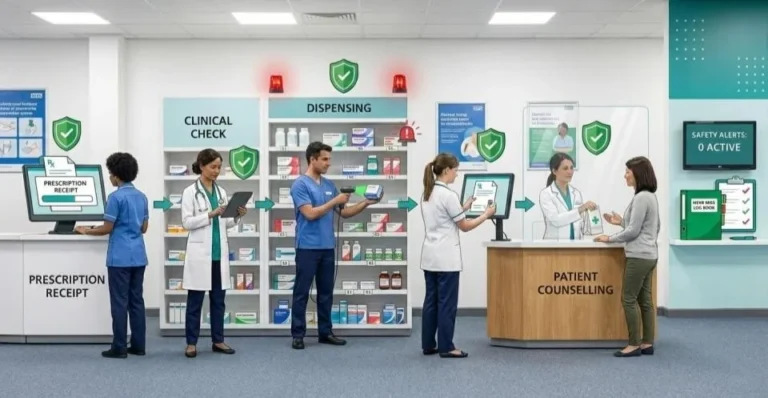


Every day, pharmacists identify prescription issues requiring prescriber input. Drug interactions, inappropriate doses, contraindications, unclear directions—all need resolution before medication reaches patients.
Yet the communication itself often determines outcome more than the clinical concern. A poorly communicated intervention may be dismissed. A well-communicated one prompts appropriate change. Professional relationships built over time make future communications easier.
Why GP Communication Matters
Patient Safety
Communication enables prescription error correction, clinical concern resolution, information sharing, and care coordination. Without effective communication, identified issues may not be resolved.
Patient Care Quality
Collaboration improves medication optimisation, adherence support, clinical service coordination, and shared decision-making.
Professional Relationships
Good communication builds mutual respect, increases receptivity to future interventions, facilitates professional collaboration, and supports integrated care.
Communication Channels
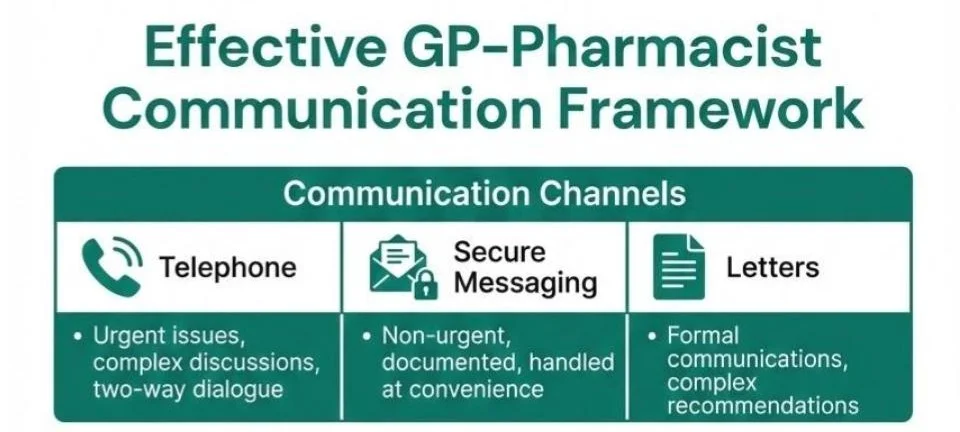
Telephone
Best for urgent issues, complex discussions, and two-way dialogue. Challenges include getting through to prescribers, time constraints on both sides, and no written record without follow-up.
Secure Electronic Messaging
Best for non-urgent issues, documentation needs, and detailed information. Benefits include written record, can be handled when convenient, and clear documentation. Challenges include slower response and not suitable for urgent matters.
Letters and Faxes
Traditional but declining. Use for formal communications, complex recommendations, and documentation requirements.
Effective Intervention Communication
Before Communicating
Prepare by gathering all relevant patient information, researching the clinical issue thoroughly, knowing what outcome you want, and having evidence ready if needed.
Structure Your Message
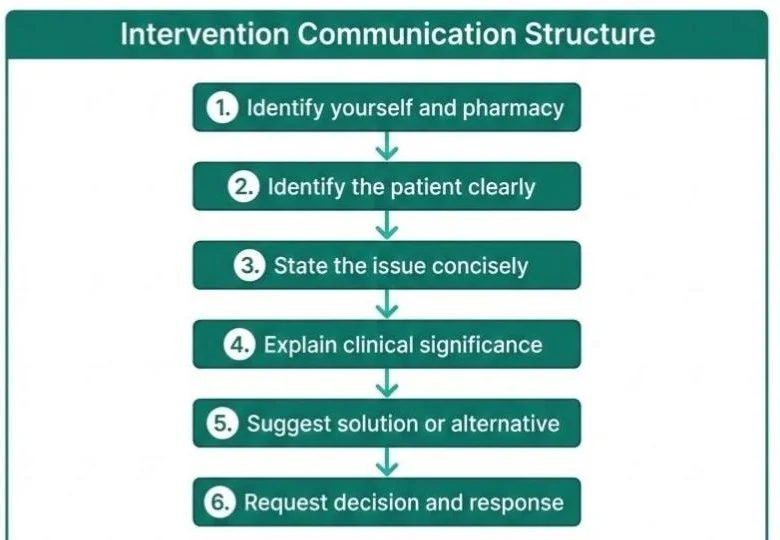
Use a clear structure: identify yourself and your pharmacy, identify the patient clearly, state the issue concisely, explain the clinical significance, suggest a solution or alternative, ask for decision and response.
Be Professional
Respect prescriber expertise. Present information objectively. Avoid accusatory language. Focus on patient benefit. Accept that prescriber may have information you do not.
Document Everything
Record the issue identified, who you contacted, what was discussed, the decision made, and any follow-up required.
Building Relationships
Proactive Engagement
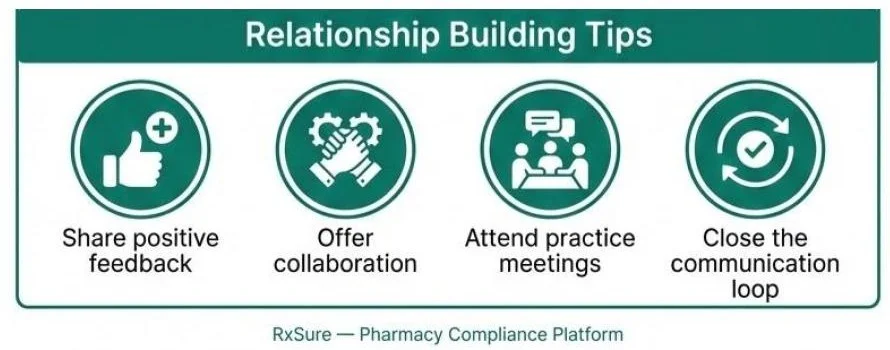
Do not only contact for problems. Share positive feedback when appropriate. Offer collaboration on patient care. Provide clinical service information. Attend practice meetings if invited.
Consistent Quality
Ensure every communication is professional, accurate, concise, solution-oriented, and timely.
Follow Up
Close the loop by confirming action taken, updating patient, documenting outcome, and thanking prescriber when appropriate.
Handling Difficult Conversations
When Prescriber Disagrees
Listen to their reasoning. They may have information you lack. If you still have concerns, document clearly. Escalate if patient safety at risk. Accept professional disagreement where reasonable.
When You Cannot Get Through
Try alternative routes. Leave clear messages. Document attempts. Use secure messaging as backup. Escalate urgent issues appropriately.
Technology Support
Modern systems can generate intervention documentation, provide clinical evidence, track communication history, and facilitate secure messaging.
RxSure documents interventions and communications as part of consultation workflows. Every interaction is recorded, creating audit trail and supporting continuity.
Start your free trial and improve GP communication.