

SmPC Guidance at Point of Care in Pharmacy
How to access and apply SmPC information effectively during pharmacy consultations. Make evidence-based decisions with guidance at point of care.
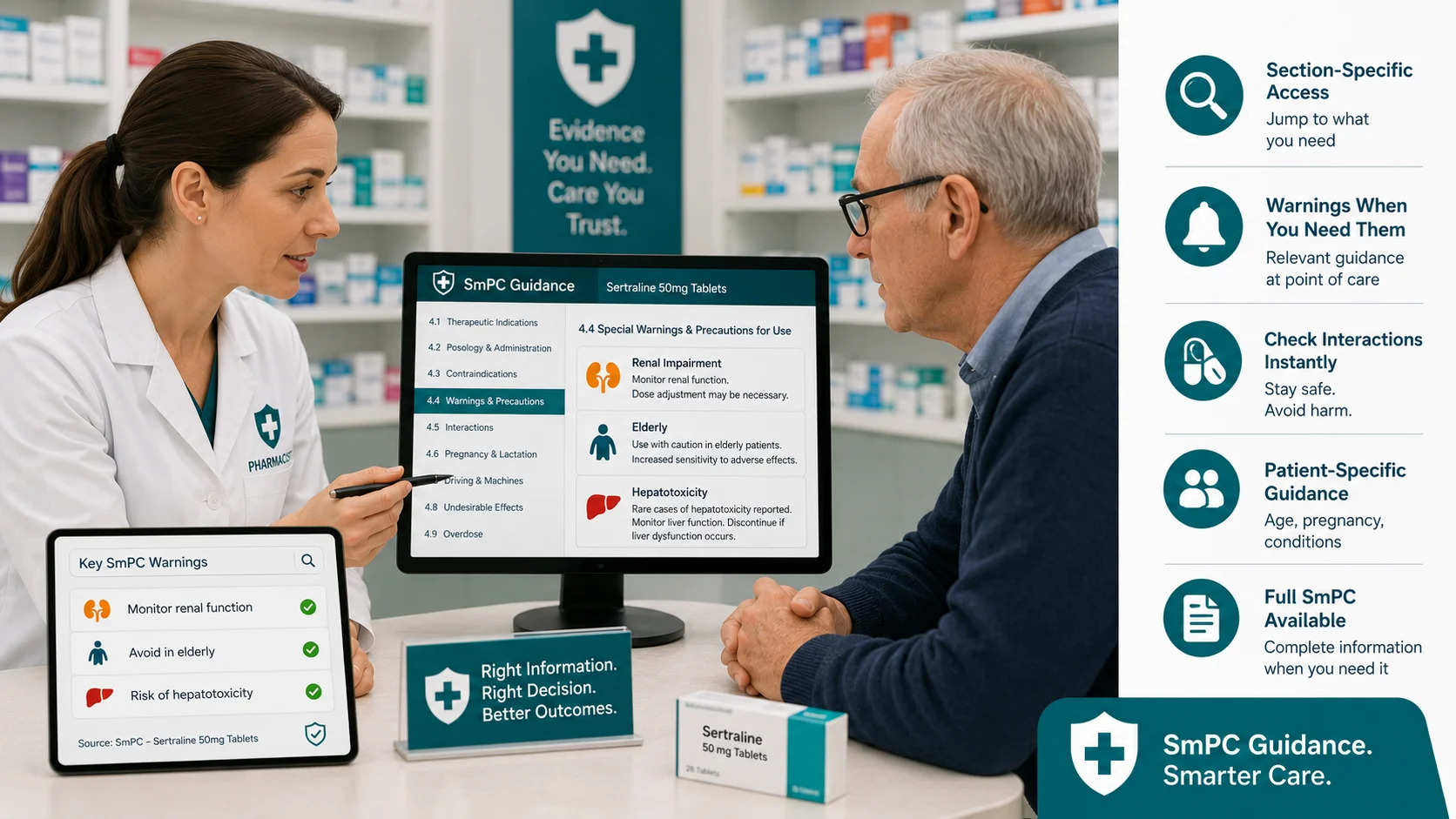
Monitor renal function. Avoid in elderly. Risk of hepatotoxicity.
Critical warnings. From the SmPC. But buried in 40-page documents that nobody has time to read during a consultation.
The Summary of Product Characteristics contains essential prescribing and dispensing information. But its format makes it impractical for point-of-care reference without appropriate tools.
Understanding SmPCs
What SmPCs Contain
Standardised sections include: therapeutic indications (4.1), posology and method of administration (4.2), contraindications (4.3), special warnings and precautions (4.4), interaction with other medicinal products (4.5), fertility, pregnancy and lactation (4.6), effects on ability to drive and use machines (4.7), undesirable effects (4.8), and overdose (4.9).
Why SmPCs Matter
SmPCs are the definitive reference: legally binding information, basis for licensed use, source for patient information, and foundation for clinical decisions.
Making SmPCs Accessible
Section-Specific Access
Go directly to relevant sections: Section 4.3 for contraindications, Section 4.4 for warnings, Section 4.5 for interactions, Section 4.6 for pregnancy and breastfeeding. Do not scroll through entire documents.
Integrated into Workflow
Information appearing when relevant: warnings displayed at dispensing, pregnancy guidance during relevant consultations, interaction alerts when combinations occur, age-specific advice for relevant populations.
Evidence-Based Care
SmPCs represent regulatory consensus on safe medication use. Access at point of care ensures this guidance influences actual practice.
RxSure integrates SmPC guidance into consultation workflows. Key warnings appear when relevant. Full information is accessible when needed.
Start your free trial for point-of-care guidance.